Ken Griffin says Trump’s plan for America First was always doomed to fail: ‘Most people don’t want to live that dream’
When President Trump told the world on "Liberation Day" last year that foreigners had "torn apart our once-beautiful American Dream," his plan to restore it promised "jobs and factories will come roaring back into our country."
Analysts and business moguls were dubious about the "America First" agenda. Given that it was coupled with sweeping tariffs on the entire world, many were concerned that this form of nationalism might result in America's ending up alone.
Citadel's Ken Griffin was among those who weren't sold on the scheme, and 18 months after Trump's famed Rose Garden address, the billionaire CEO has declared tariffs a "disaster."
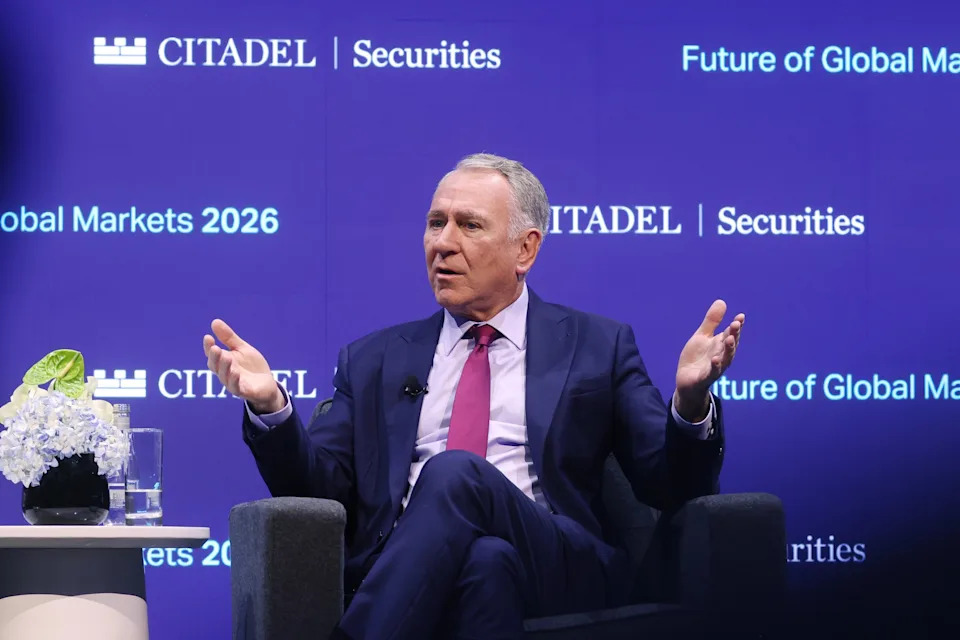
Griffin suggested the plan to reindustrialize the nation and restore the American Dream was flawed from the outset. Speaking at the Citadel Securities Future of Global Markets conference yesterday, Griffin said: "To be blunt, like, I hate to say it, but I've been right. It's been pro-inflation.
"It has certainly taken supply chains around the world and severed them. And we're not going to industrialize efficiently in our country. Unemployment's low [4.2%], like, if you have this dream of an industrialized America, number one is most people don't want to live that dream. They don't want to be in factories making Nikes and T-shirts."
It's a phenomenon that analysts have observed trickling through the labor market: Moody's chief economist Mark Zandi noted this summer that native-born unemployment among Americans had begun to rise, based on analysis of a 12-month moving average of seasonally unadjusted data. Part of the reason for this, Zandi told Fortune, is that U.S.-born workers don't want to take on the jobs historically held by immigrant workers for relatively lower wages.
"It just goes to show how difficult many of these jobs are," Zandi said. "Native-born workers would take them, but it would require much, much higher wages … [and that] would make it uneconomic for the businesses to actually produce whatever it is they're doing."
He added: "These jobs are typically ones that are very difficult, very arduous jobs that require a lot of physical hardship, and the native-born workers just haven't done these jobs for quite some time and are in no mood to take them now—certainly not at these wages."
Bring in the robots
Instead, Griffin advocated for robotics—increasingly advanced thanks to artificial intelligence—to carry out U.S. manufacturing of essential goods efficiently. In September, Griffin announced a $3 billion gift to Carnegie Mellon University Miami, to pursue the "next era of American innovation."