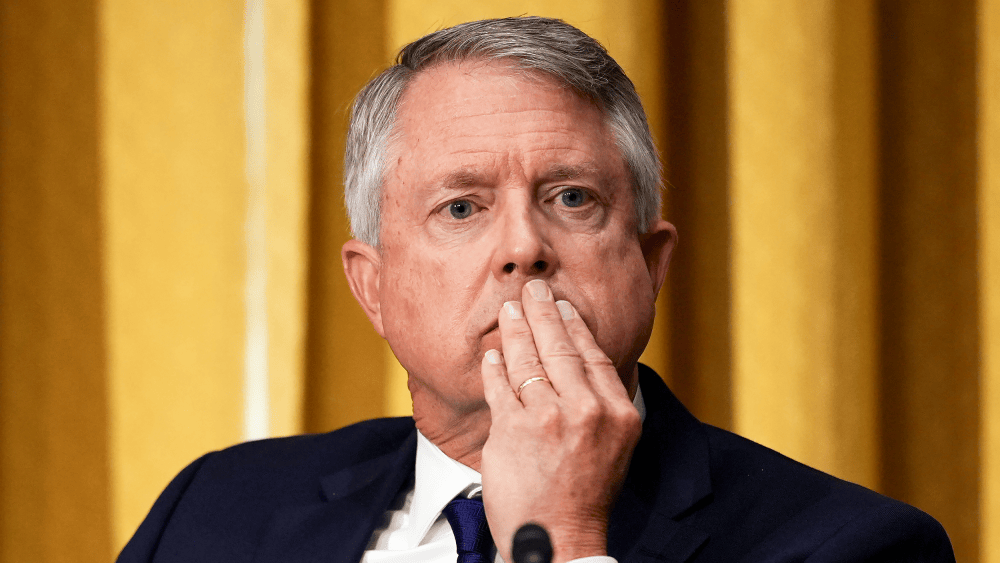
Editor’s note: This story is a collaboration between Kansas Reflector and MS NOW.
As Sen. Roger Marshall fights for his political life in Kansas, a staffer for Democrat Adam Hamilton — Marshall’s opponent — has been needling the Republican senator’s staff with an unusual question: Are any of you getting paid?
According to Marshall’s most recent Federal Election Commission records filed in July, no one working for Marshall’s campaign had received a paycheck in the past five years — a situation that campaign finance experts said was potentially unprecedented in the modern era of politics.
But according to Marshall’s chief of staff, Brent Robertson, the campaign now does have some paid staff, though he declined to offer evidence or details, such as how many people were being paid or when their employment began.
Still, campaign experts say the situation raises questions about the line between Marshall’s campaign and his taxpayer-funded Senate office.
In a joint investigation, Kansas Reflector and MS NOW obtained audio recordings, photos, videos, screenshots of text messages and calendar items from 2020 — when Marshall first ran for his Senate seat — that appear to show the senator and his top aide repeatedly using congressional staff and government resources in ways that experts say likely crossed the line between official business and campaigning.
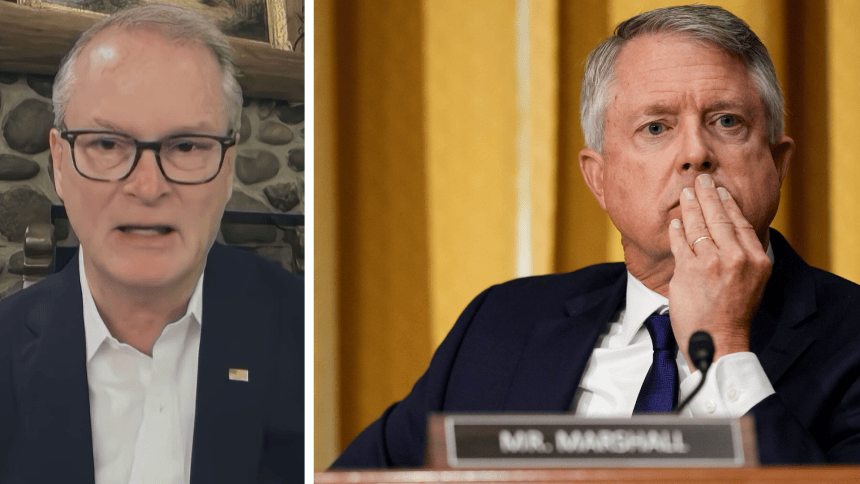
According to the Members’ Congressional Handbook, if the “primary purpose” of a trip is for a non-official event or purpose, “the office cannot schedule official activities around the non-official event/purpose to make the travel eligible for congressional offices to be reimbursed.”
But the materials obtained by Kansas Reflector and MS NOW show the office repeatedly testing that principle during Marshall’s 2020 campaign — and multiple former staffers recounted instances when the office seemed to function more as a campaign arm than a taxpayer-funded Senate office.
After promising to “meaningfully” respond to a detailed list of questions if Kansas Reflector and MS NOW extended its deadline for comment, Ryan Dollar, a lawyer for the Marshall campaign, sent a statement that did not address the questions.
“The Marshall campaign will not share, nor has any obligation to share campaign operations information with our opponent’s reporters, and Kansans know that Senator Marshall and his team fully comply with both FEC rules and Senate ethics while fighting for Kansas,” Dollar wrote, claiming the story came from “a disgruntled employee.”
There are real questions, however, whether Marshall and his team have fully complied with all FEC and congressional ethics rules.
At one point in the more than 200 texts reviewed, Robertson successfully arranges a single official meeting in Chicago and then instructs staff that the entire campaign trip would now be deemed “Official,” allowing them to book flights for Marshall using taxpayer funds.
According to the 2020 calendar items, many of the trips Marshall expensed to his Members’ Representational Allowance — the taxpayer-funded account used to operate congressional offices — included campaign events. The staff had a color-coded system to delineate what was an official meeting and what was campaign-related.
During one trip to Oklahoma at the end of September 2020, according to notes one former staffer took, Marshall used his leadership PAC to pay for his flights. Robertson, however, booked hotels and paid for restaurant meals with the MRA.
A trip to Dallas the next month, in October 2020, warranted Marshall using campaign funds to book flights, according to the notes. But he used taxpayer dollars for a meal, despite the only official event on his calendar being a Zoom meeting. In contrast, a screenshot of his color-coded calendar shows his attendance at a Cowboys v. Giants game, three meetings and a fundraising dinner all marked as political events.
When staff objected at one point to booking what appeared to be a campaign trip using official government funds, Robertson told them they could blame him if they were ever deposed, according to a text message a former staffer sent their mother at the time.
During one text exchange, after Robertson was asked whether the primary purpose of a trip was official or campaign, the chief of staff wrote: “Primary purpose is what we say it is.”
During another exchange, a staffer asked for more details about a dinner at a steakhouse in Dodge City, Kansas.
“Was any other staff eating at the Prime on Nine? They’re questioning the $170 price tag for 2,” the staffer asked Robertson.
“Who is they,” Robertson asked. He ultimately declared “there’s no statutory limit on what I can spend on meals.”
“Approve it,” he wrote.
Experts noted there is a statutory limit on what government employees can spend on food, and it is “not to exceed the daily rate for meals” that is established yearly by the General Services Administration. For Kansas in 2020, it was $55.
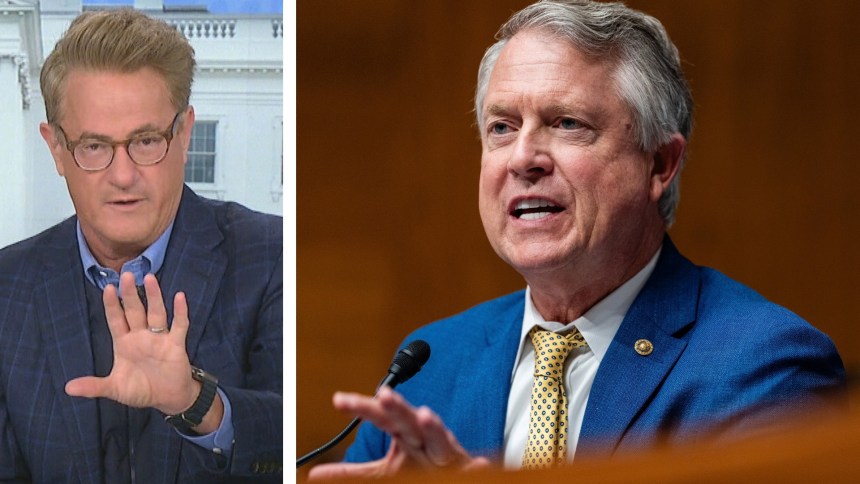
In another text exchange, Robertson claims he got clarification that the office only needs one official meeting to allow it to use taxpayer funds to travel for a slate of campaign events.
“We have a lot more leash than even I thought. Go ahead and book Philly for Doc,” Robertson wrote about a March 2020 trip to Philadelphia for Marshall, whom staffers refer to as “Doc.” “There is no ratio system at all.”
“Will literally need one official meeting per trip,” Robertson wrote.
Campaign finance experts disputed Robertson’s interpretation.
Craig Holman, a campaign finance and government ethics expert at Public Citizen — a nonprofit consumer rights and good government group founded by Ralph Nader — said these accounts of Marshall and his office’s “blatant disregard” for congressional ethics rules are “both breathtaking and seemingly very damning of Marshall’s character.”
“Not only do many of the travel events strongly suggest deliberate violations of the law, but even off-the-cuff remarks by staff show an intentionality of these infractions and efforts to cover them up from public view,” Holman said.
“Federal law and congressional ethics rules are very clear that government resources pay for official travel related to congressional duties, and campaign funds and personal budgets must be used to pay for the campaign or personal components of congressional travel,” Holman said, adding that Marshall appears to have used taxpayer dollars for “all aspects of campaign trips and personal travel.”
Brett Kappel, a lawyer at Harmon Curran who’s an authority on campaign finance, said contrary to Robertson’s assertion, “staff do not, actually, have a long leash” on the use of official funds for campaign purposes.
“There are a few, very limited, and very specific exceptions that permit the use of official resources for campaign purposes,” Kappel said, quoting a House Ethics memo on campaign activity.
The text messages also reference Marshall’s transportation to Florida, where his house in Sarasota has become a campaign issue.
At one point in the texts, Robertson instructs staff to fly Marshall “from Kansas to Sarasota as a stopover in the future.”
Where Marshall primarily lives has become an issue in his re-election campaign. During a debate last month at the Kansas State Fair, as Marshall talked about his $1.2 million Florida home, a combative crowd chanted, “You don’t live here!”
The texts show staff repeatedly navigating Marshall’s unique travel demands. The Kansas City Star reported in August that Marshall took at least 14 official trips through Sarasota between 2021 and 2024, costing taxpayers $18,886, according to the Star’s analysis of travel expenses reported by Marshall’s office to the Secretary of the Senate.
More articles


Marshall’s office told MS NOW on Thursday for a separate story that Marshall had sold his Florida home. As of Friday, the Zillow listing for the house, which had a list price of $1.45 million, said “accepting backups.”
Robertson has also been the subject of his own commuting controversy. A Politico investigation last year reported that he charged taxpayers $44,000 over the course of two years for expenses related to commuting from his home in Lynchburg, Virginia, to his workplace in Washington, D.C. Public records show the total is now more than $71,000.
Stanley Brand, an attorney who served as House general counsel under Speaker Tip O’Neill, told Politico he had “never” heard of a similar arrangement, though Marshall’s office said the expensing was “in full accordance and approval of Senate ethics, rules, and guidelines.”
A 2020 meeting Kansas Reflector and MS NOW were able to review, however, offered an example of Marshall himself potentially violating those ethics, rules and guidelines.
MARSHALL’S ‘PEP TALK’
On Oct. 13, 2020, Marshall texted senior staff on his official and campaign side to set up a “pep talk” with “everyone.”
“Yes everybody,” Marshall wrote.
Government ethics experts said that meeting appears to have violated federal ethics rules that prohibit the use of “official resources” for campaign purposes.
Both congressional and campaign staff — many using taxpayer-funded equipment like cellphones and computers — were summoned to the “MANDATORY ALL-STAFF CALL,” as it appeared in their official email calendars. And video of the Oct. 14, 2020, Zoom call shows Marshall and his congressional aides discussing the status of his campaign.
Throughout the call, Marshall talks about a campaign sign shortage and what door-knockers are hearing on the ground. He also asks his campaign manager for “talking points” and “helpful hints” for dealing with voters who were concerned about healthcare.

Some staff felt the Zoom call was such a clear-cut violation of ethics rules that they were compelled to document their concerns.
“Sending this message as a reference that we objected to this illegal (activity) and that I raised it with our superiors and noted that it is not permissible per the above ethics statute,” Marshall’s legislative director at the time, Michael Brooks, texted another congressional staffer.
Brooks didn’t respond to inquiries for this story.
Holman said the Oct. 13 meeting “clearly crosses the line into illegal behavior.”
“Members of Congress and all of their staff are thoroughly briefed against mixing office time and official resources with campaign duties,” he said. “All staff are given step-by-step instructions on how to honor the wall between official duties and campaign activities.”
“That would be why Marshall’s staff was acutely aware that the staff ‘pep talk’ about the campaign on official time was not legally permissible,” Holman continued. “Both Marshall and the staff may be held liable for that violation.”
Marshall is currently in a close Senate race with Democratic pastor Adam Hamilton, who leads the nation’s largest United Methodist congregation. Recent polling has shown the race essentially tied, turning a reliably red Senate seat into a competitive contest. And while Hamilton’s campaign has outraised Marshall in donations, national Republicans are pouring money into Kansas to protect Marshall. No Democrat from Kansas has won a Senate seat since 1932.
Marshall has also faced intense scrutiny following a New York Times report about lawsuits filed against former patients over unpaid medical bills. His campaign has pushed back aggressively against the allegations, with a spokeswoman for Marshall saying he spent decades caring for patients regardless of their ability to pay.
“Judges issue warrants when people repeatedly miss court dates, not doctors,” Payton Fuller, the communications director for Marshall’s office, wrote in a statement.
But even that response underscores the unusual overlap between Marshall’s official office and his campaign: Fuller is both a current congressional staffer — earning a taxpayer-funded salary — and an unpaid campaign volunteer spokeswoman. For that separate story involving Marshall’s Florida property, MS NOW reached out to a generic press email for the campaign. Fuller wrote back, from her campaign email, as “communications director for Senator Roger Marshall.”
Amid Marshall’s close race, the idea that he wouldn’t have any paid staff gave government ethics and campaign finance experts pause.
One expert noted that Marshall had somehow been operating a campaign with surprisingly few expenses. According to his FEC reports, Marshall only spent $206,869 on his campaign from the beginning of 2025 until August — the last reporting period.
“For a Senate campaign, it is extremely uncommon for there not to be expenses for campaign staff and countless other normal campaign expenses,” said Kedric Payne, the vice president and general counsel of the Campaign Legal Center.
He added that senators may be subject to criminal penalties if they or anyone in their office misuses official funds with their knowledge. And if Marshall’s office “used taxpayer funds for campaign activity disguised as official business, it is a clear violation of one of the most basic ethics rules.”
“These very serious allegations warrant at the very least an immediate and credible explanation from the senator’s office,” Payne said. “Otherwise, a Senate Ethics Committee investigation is needed.”

Sherman Smith is the editor in chief of Kansas Reflector, which he founded in 2020. A three-time Kansas Press Association journalist of the year, he writes about things powerful people don't want you to know. He is the winner of an A-Mark award for investigative reporting. Kansas Reflector is part of States Newsroom, the nation’s largest state-focused nonprofit news organization.
Matt Fuller
Matt Fuller is the director of Congress at MS NOW, overseeing Capitol Hill coverage. He was previously the Capitol Hill bureau chief for NOTUS, the Washington bureau chief for The Daily Beast, and a reporter for HuffPost, Roll Call and Congressional Quarterly. He is a board member and frequent lecturer for Georgetown’s Government Affairs Institute, and he has taught at George Washington University’s Graduate School of Political Management. He was the 2015 recipient of the Everett McKinley Dirksen Award for his coverage of the House Freedom Caucus.





Become a Member to join the discussion