
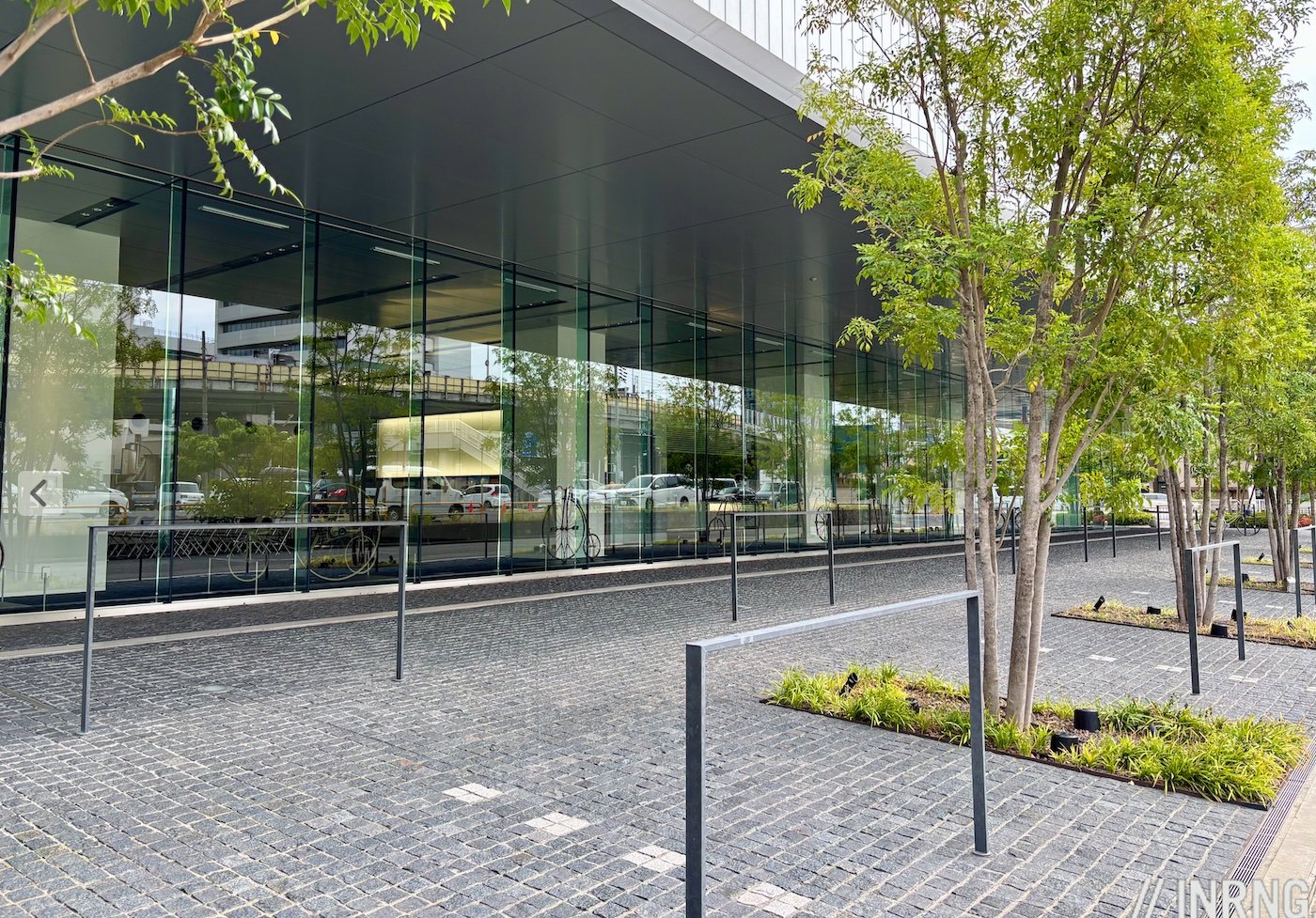
A look at the Shimano Bike Museum with praise for its focus on bicycles over its own corporate history. For anyone in the Kansai area of Japan, perhaps visiting Kyoto or Osaka, this has a prodigious collections of machines and within a well-designed setting.
The museum itself is striking, a modern building that’s glass and steel. To see pictures of it online is to imagine it might be Shimano’s head office in a prime location, and that there’s a museum inside. However it is all museum, and the surrounding area more ordinary.
“In Japanese, we call a bicycle “jitensha,” which literally means “wheels rotated by oneself.” This means a bicycle is operated by the rider and that there are as many ways of enjoying cycling as there are riders.”
This English text is from the welcome message written on the wall at the start of the museum tour. You might learn the word for bicycle here as you enter, by the time you leave the message of many ways to enjoy cycling will come through. The sign is of course in Japanese too and the museum is bilingual.
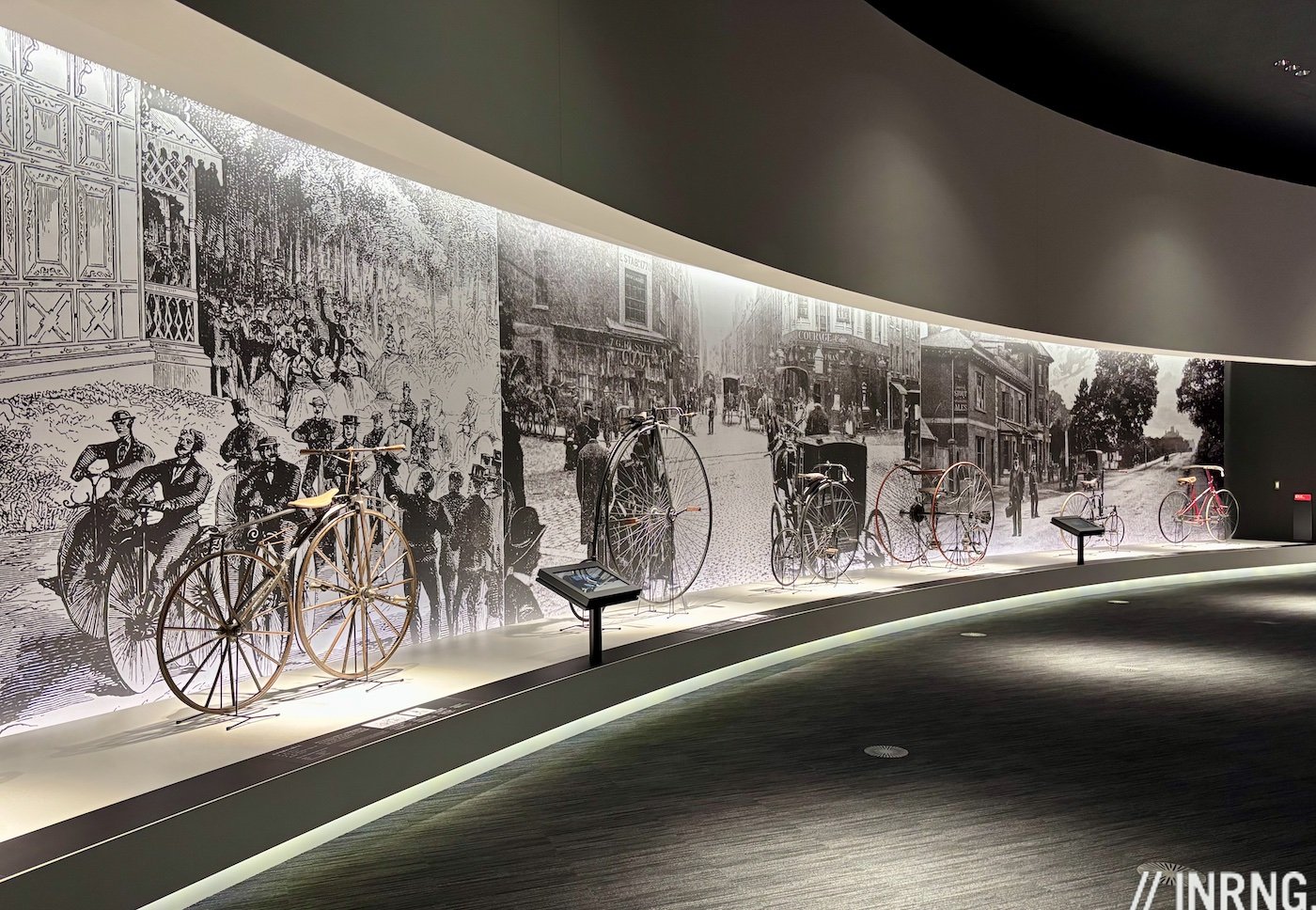
Head upstairs and you enter a large darkened room with a procession of bicycles under spotlights. These cover the chronology of the machine, from rudimentary hobby horses to the arrival of pedals, the chain, tires more evolution. This large space also doubles as an auditorium and an educational film is played at times that covers the history of the bicycle and the origins of cycle sport too, all within a wider societal context that touches on war, industrialisation and consumerism.
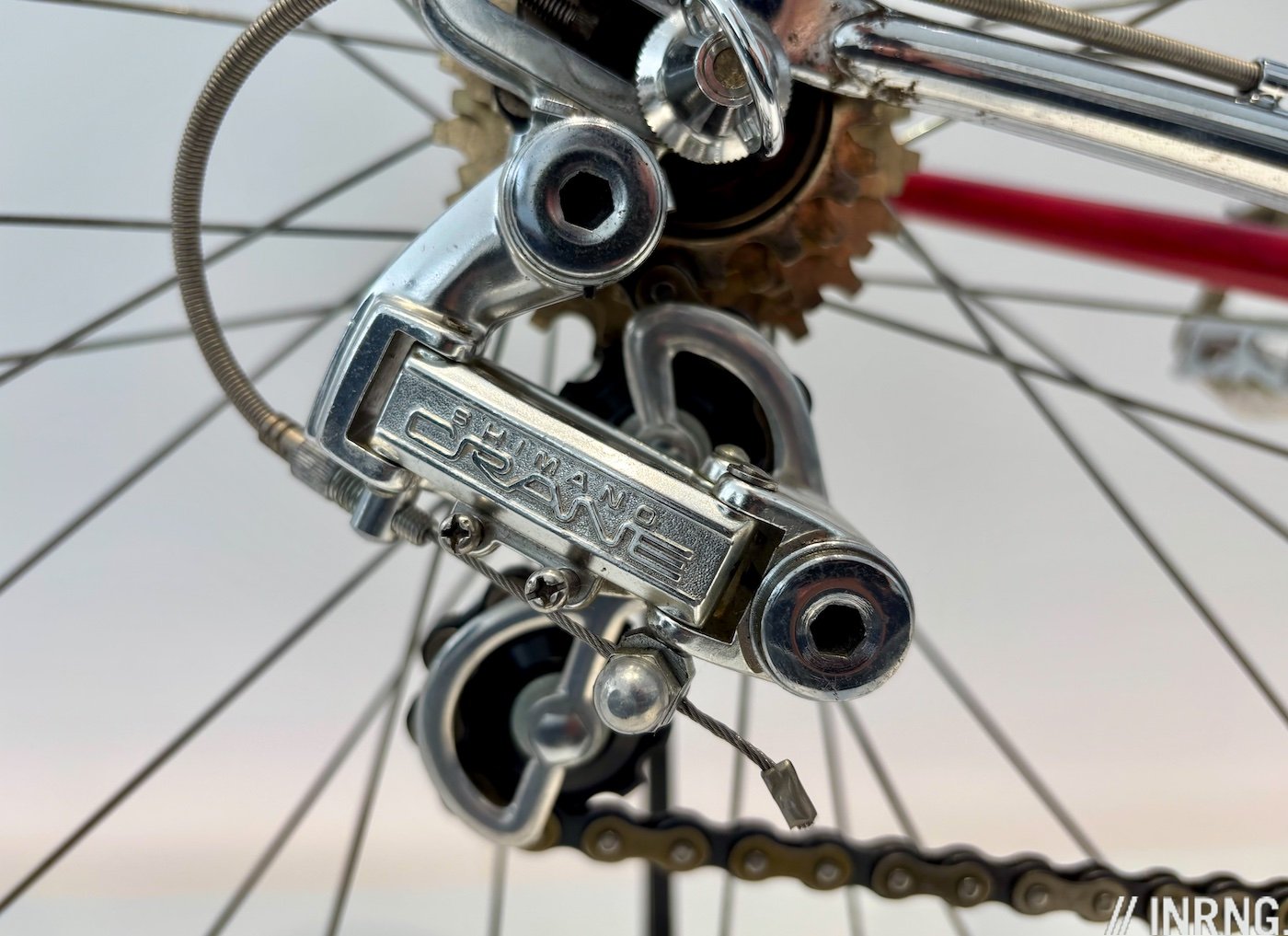
Then it’s into a bright white room where frosted glass lets in daylight and more spotlights highlight exhibits such as Freddy Maerten’s steel Flandria. You can get close to touch it – not that you would or should – but it’s not behind glass or roped off, just raised on a small stage. You can see the Ishiwata tubing decal and the Shimano Crane rear mech, the beginnings of Shimano in the pro peloton. All the other bikes are similarly accessible. You can see bikes used at Paralympic games and notice the custom modifications up close. A Specialized Stumpjumper, one of the first mountain bikes to go on sale, sits there and you can spot a Campagnolo headset and motorbike brake levers among the components on the “clunker”.
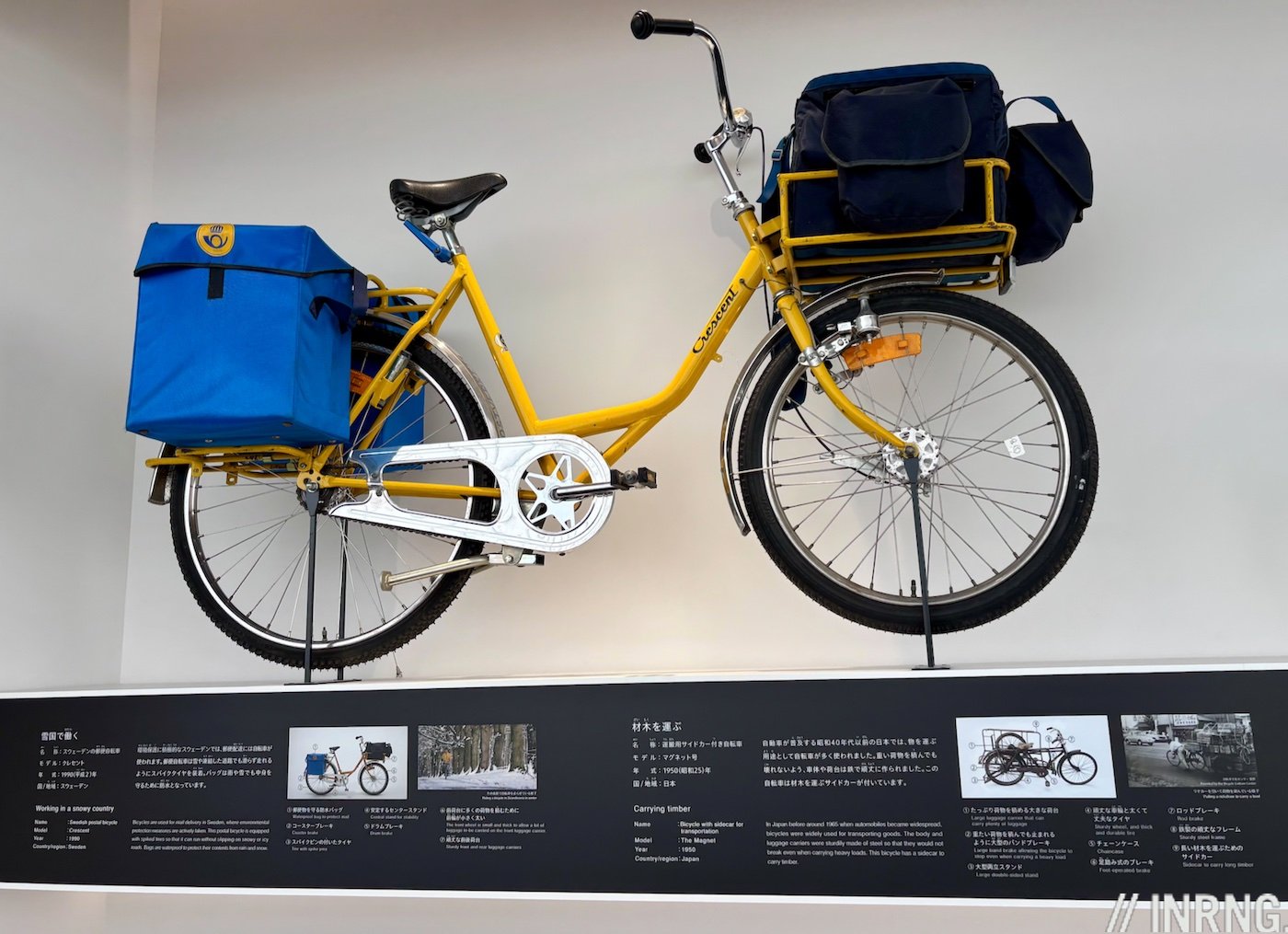
As well as history there’s the humdrum. A Crescent bike in the yellow and blue of the Swedish postal service, complete with studded tires to show you can ride on ice, even with a heavy cargo. A very much used Cannondale is loaded with luggage, spare tires wrapped around the bags like boa constrictors, and all caked in dust, as if Tatsu Sakimoto had come in and parked it mid-way during his four year, 55,000km journey around the world. A Merida bike from the 2021 Olympics road race is there, complete with scratches galore and crash dents. The event feels like yesterday but the bike already looks ancient. Plenty of kids bikes feature too, shopping bikes and more. Everyone ought to recognise something they’ve ridden.
Stands explores materials science with a comparison of steel, aluminium and titanium tubing and the chance to feel the weight of these metals yourself. Another lets you pick up racing bike to feel how light it is. But among all this educational material is the simple message that bikes can do plenty.
It’s actually hard to find much about Shimano and its origins here. There’s a mention that gun blacksmiths in Sakai started repairing imported bikes in the late 19th century and soon began manufacture. For what it’s worth the city Sakai has long been a big steel production area, first for swords and then into other goods including guns and cutlery. It’s here that Shimano started too but it’s only later and in passing that you come across a small item that was Shimano’s first product: a freewheel.
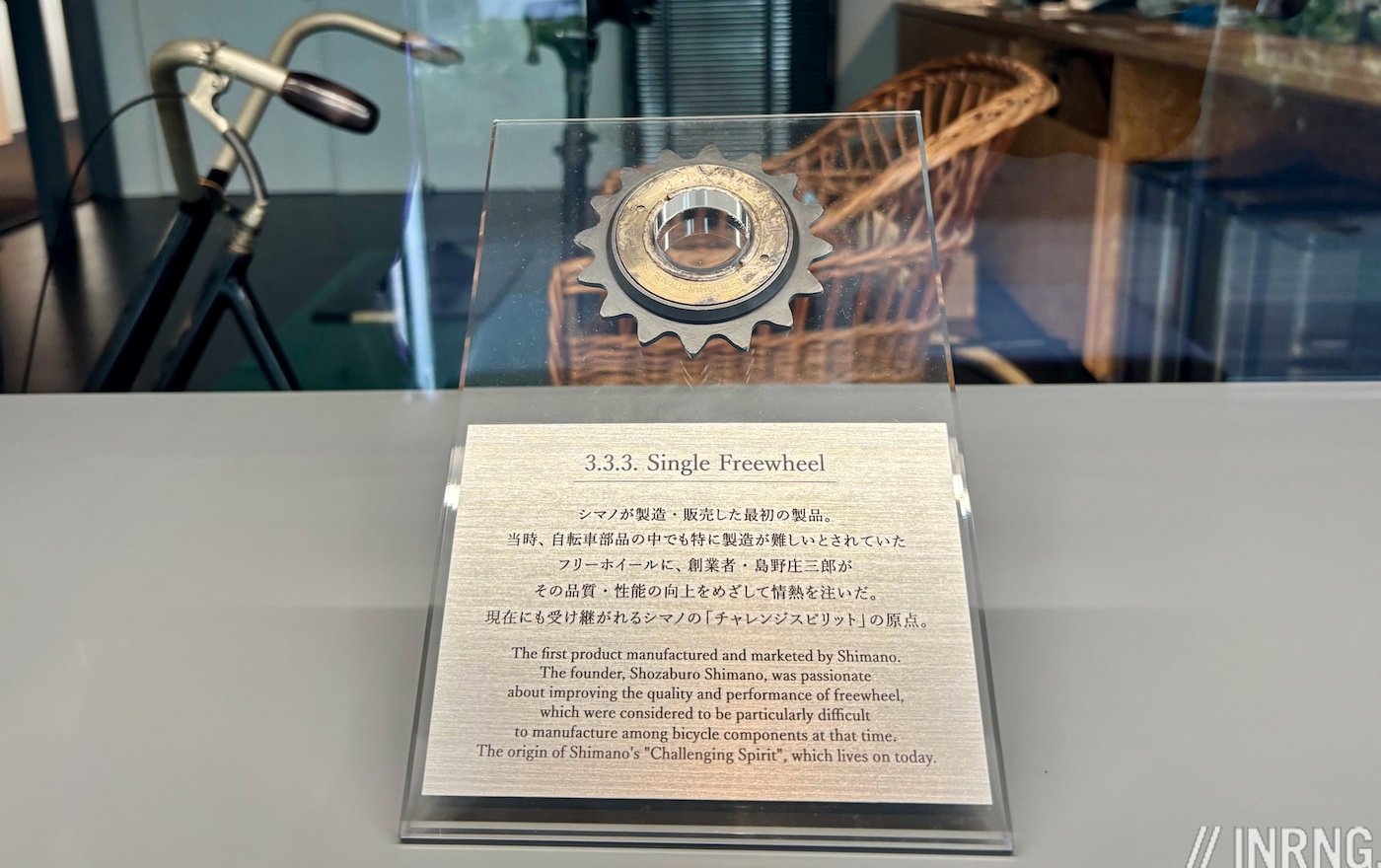
Shozaburo Shimano founded the company to make these and one thing led to another. Including fishing freewheels and gearing can be applied inside reels and today one quarter of Shimano’s revenue coming from fishing tackle, about a billion Euros, comes from fishing but there’s not a rod nor reel in sight.
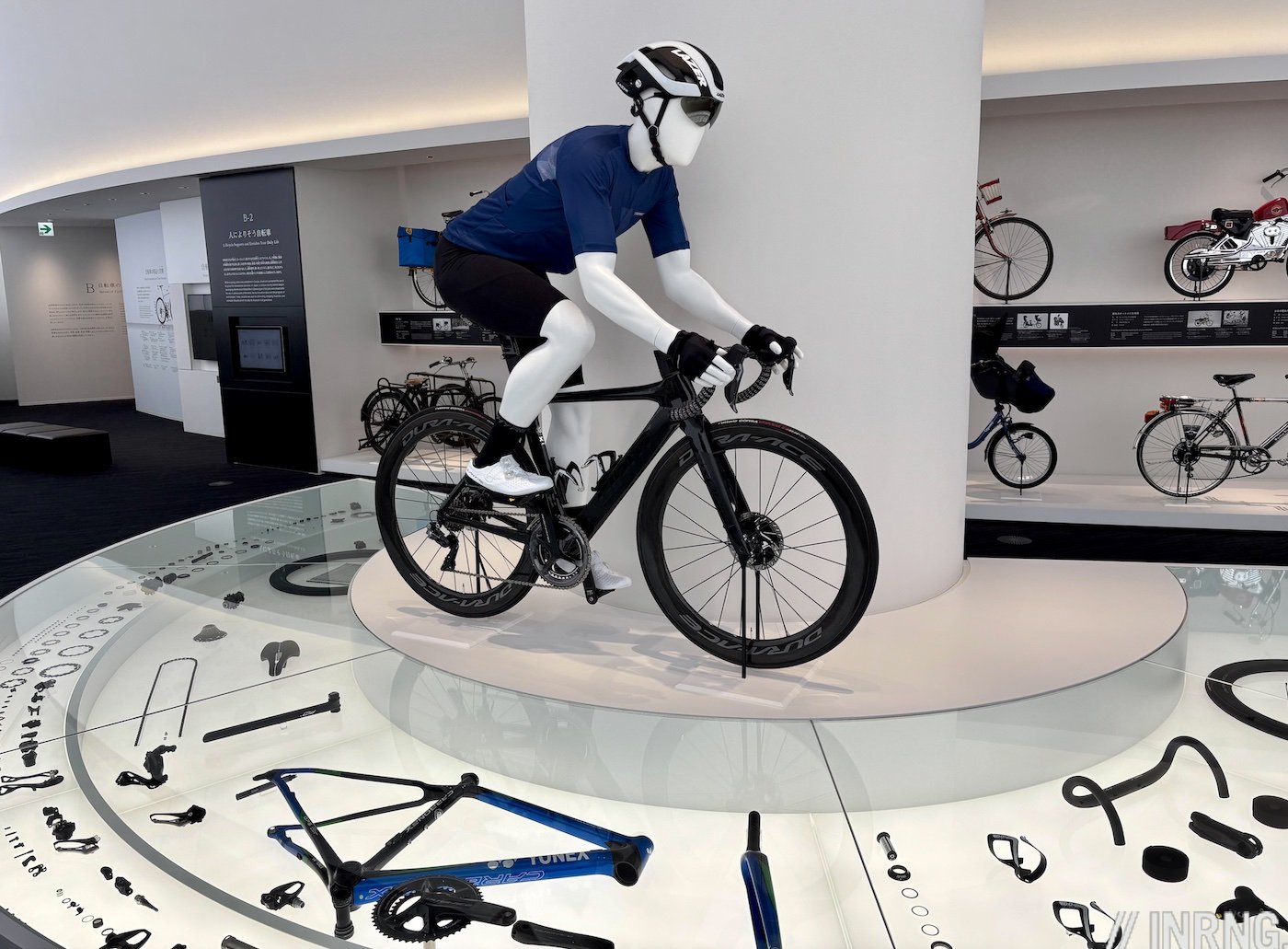
Still the museum is visibly the Shimano museum in other ways. There’s excellent stand where a racing bike has been broken into pieces, apparently there are 3,200 parts in one bike if you really count every chain pin, bolt and electronic circuit component. Of course it’s a Shimano Dura-Ace groupset in the display. Good luck finding SRAM or Campagnolo but there are a few examples, even a Mavic rear mech.
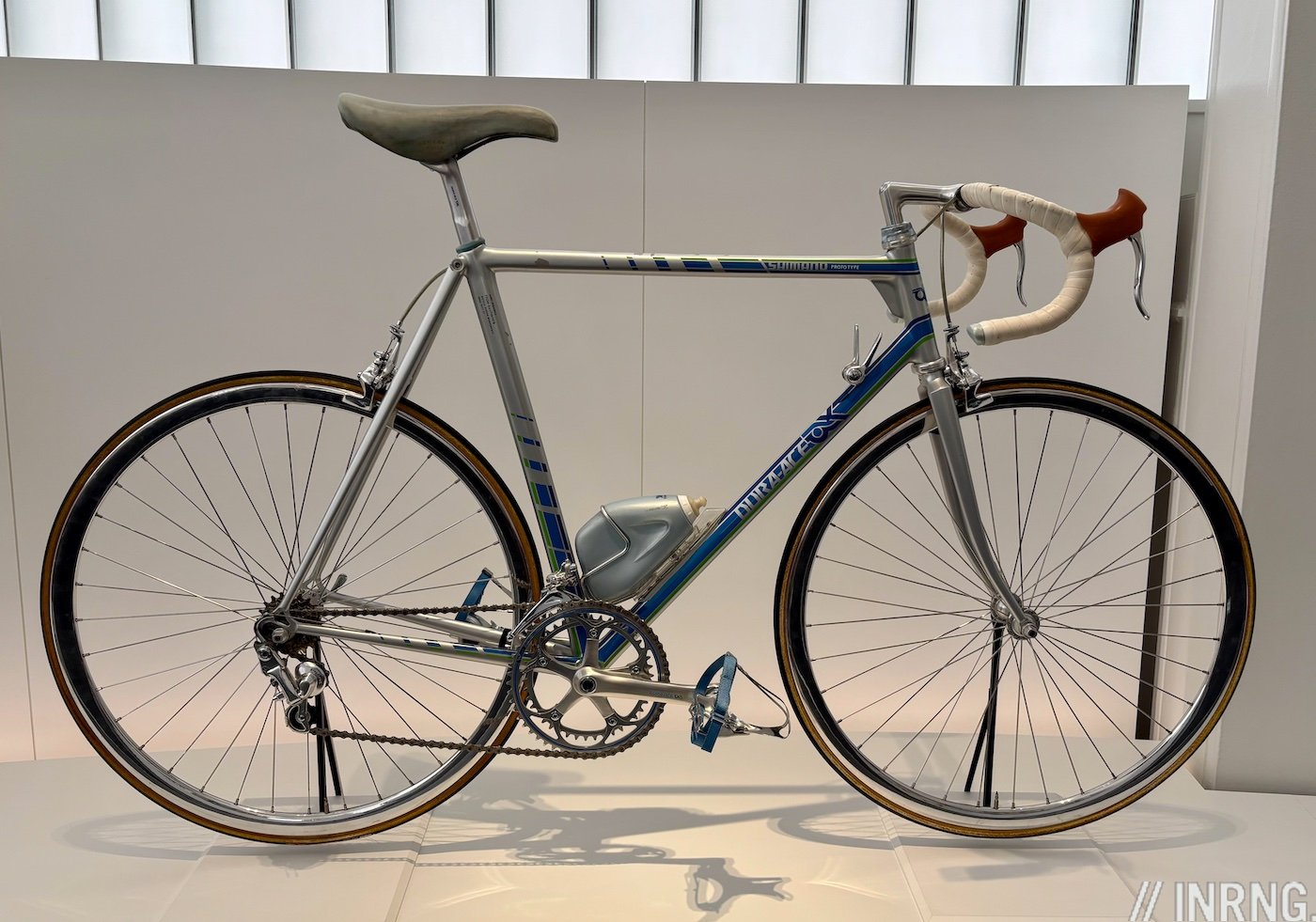
The top floor of the museum includes also a set of display cases for the flagship Dura-Ace and XTR groups starting with the 1973 version, then 1984, 1996, 2004, 2012, 2016, 2021, complete with four empty displays waiting to house 2027 and the rest of what the future brings.
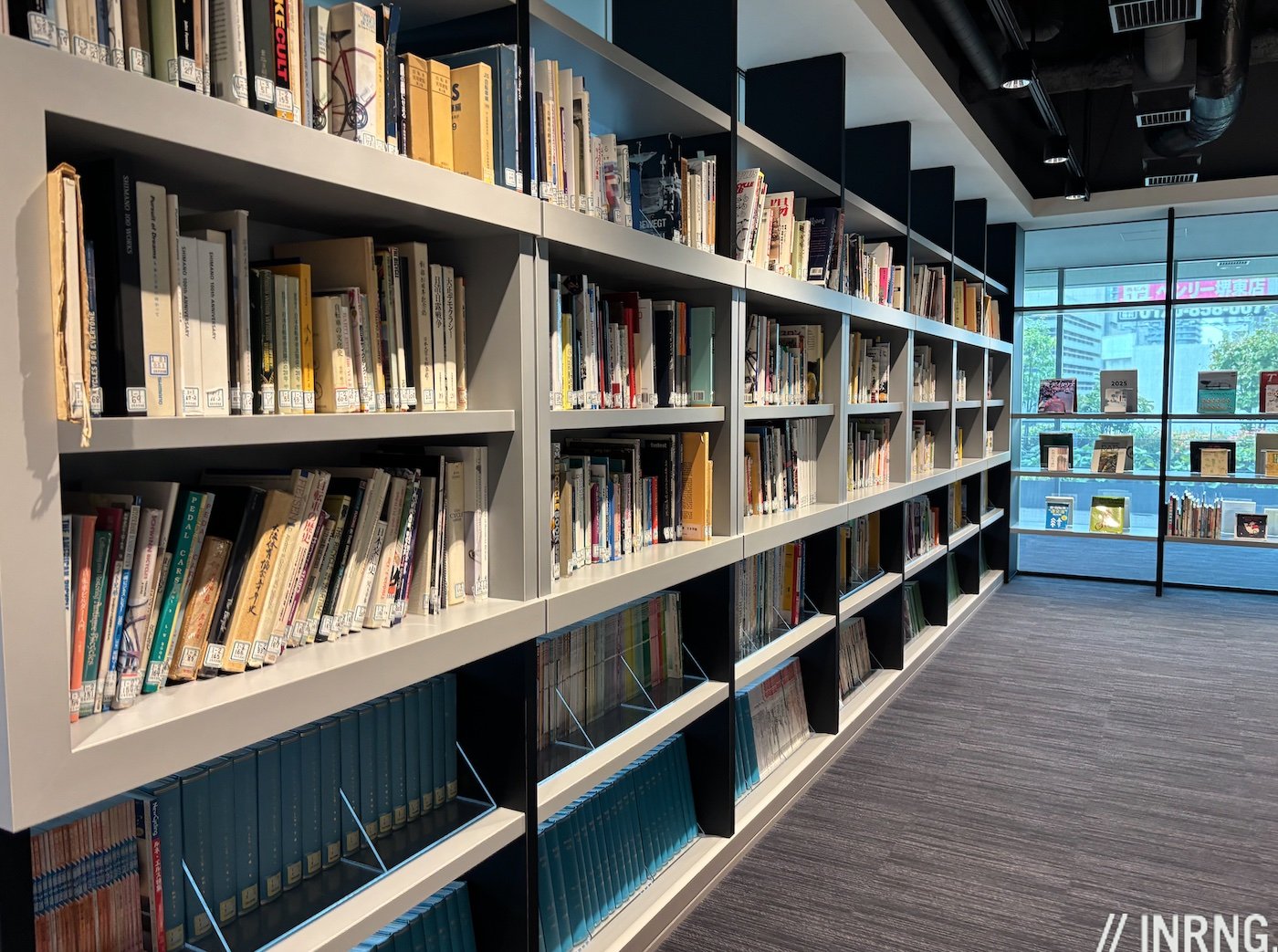
There’s also a library and behind this, a locked archive for researchers. This is valuable, the museum might house one of each type of bike but here the shelves are full of books, brochures and catalogues. A treasure of primary source material. This section marks the end of the tour but you’re free to wander rather than guided to a gift store and the exit.
The Verdict
An enjoyable celebration of the bicycle and a good visual history of the evolution of machines. This might be the Shimano Bicycle Museum, and it is full of Shimano componentry, but this is firmly a bicycle museum with very little about corporate history and no hard sell either. If you want a Shimano t-shirt or some components you won’t find them here.
It covers the history of bicycles and puts the machine first, all sorts sit under spotlights and pleasantly within reach if you want to look at any details up close, from the crinkled cast iron of early bikes to the exploded disassembly of a modern race bike down to the last component.
There are other bicycle museums in the world but many are smaller and have the feel of hobby projects. Sometimes there can be excellent temporary collections in science or art museums, Merckx-Ickx was a fun example. This one works well as a permanent collection – Giant has a possibly similar one in Taiwan – and enhanced by its architecture, it is spacious (4,223m² says the museum spec) and peaceful inside. The top floor with its research archive bolsters all of this.
Access
Sakai is a city about 15km south of Osaka, Japan. It’s a 30 minute train ride from Osaka central station to Sakai or Sakaihigashi stations, the latter is closer to the museum. There’s bike parking of course.
Admission is listed JPY 500 (less than €3) but has the price gone up? I didn’t keep the receipt but a vague memory of having paid more. It’s still cheap if they doubled the price.
Yay
Welcome back!
We missed you!
Long holiday bike touring Asia, including finally making it to this museum having passed it on the train too many times.
Probably should have left an “out of office” blog post but did plan on doing some blog posts, including the museum write-up while out on the road but uploading and resizing images is fiddly and was just having too much of a good time / too tired. Back at it now though and have followed all the racing and wider news.
How many rings would you have given McNulty?
Welcome back!
Probably two, a cohesive team, he’s won in Montréal and all the previous races in the week kept saying a long break could do it.
But still an outsider, was listening to a Belgian podcast that suggested you have to go back to Laurent Brochard in the 1990s for the same kind of surprise (strong team helper who does win for themselves from time to time) and agree, Ballan and Rui Costa along the way are different; Vainsteins altogether so as a real upset.
Keen to see how and what he does now, can he put on white shorts and still pull the peloton mid-stage?
I think Mads Pedersen was a surprise at the time – he’s built a heck of a palmares since, but don’t expect he’d have had many chainrings…
One chainring and the name on the list, so the “joker card” pick.
What a cool place to visit. Not even being able to exit through the gift shop with a Shimano t-shirt blows my US American mind. I didn’t see any need for an out of office post. Easy to guess that if you don’t post for a while, it means you’ve gone riding.
If anyone really wants a souvenir the ticket counter does have a few items.
Ongietorri and welcome back. Nice to read you again, and to read that you’ve been resting and enjoying.
Looking forward to the next posts!
“Long holiday bike touring Asia”
Hope to see a trip report in the near future!
Too off topic and “my holiday photos” will bore. Plenty of readers have emailed in over the years asking about cycling trips to the Tour, Ronde, Giro, Alps, Pyrenees etc and have been able to share some tips, similarly if anyone is thinking about a trip to Japan, then happy to share some experience etc.
Sounds like a fascinating place to visit. Good to read you’ve been cycle touring. Had been hoping nothing sinister had happened!
Not even a puncture.
The museum sounds like a great place to visit. Glad to hear you’ve been enjoying a cycle tour. Was beginning to hope you’re ok!
I was surprised to read (some time ago) that the differential was invented by an early bicycle manufacturer … it was needed when he built a side by side tandem.
That would make sense thinking about it now. The Wright brothers were pioneers of aviation… but ran a bike shop. Brands like Dunlop began in cycling, the first Mercedes was a tricycle and then they added a motor on top.
James Starley was the pioneering industrialist who did it.
Welcome back. And a grand post. I finally made it to the Ghisallo museum by Como a month ago and it was far more impressive than I had hoped for. Also perfect following a six day ride through the Alps. And now, a new item on the to do list.
That’s a great museum and it also wins for the setting, the views of the Alps, the woodland nearby, it’s very scenic. The Shimano museum is not in a scenic place but the building does a great job. Both have great collections enhanced by the surroundings.
Not mentioned above but there’s a row in the Shimano museum where staff have collected bikes they like or racing bikes with history, it’s almost like a storage room rather than on display but like the Ghisallo you can see bikes like Laurent Fignon’s Raleigh, Lance Armstrong’s Trek and the tires are slowly rotting to show their age.
Just to echo the above, glad you’ve had a nice break. Must admit I really missed the blog. ‘You don’t know what you’ve got til it’s gone’!
Thanks again for another great read 👍
Welcome back 🤗
We missed you!
Welcome back and what a good idea with all the books etc. A treasure trove indeed.