The emergency room lights were bright when Mississippi Bureau of Narcotics Capt. Merle Temple stepped through the doors in November 1976, his adrenaline still pumping from the gunshots and panicked shouts all around him on a Lowndes County backroad he had just left.
Inside, his eyes landed first on Agent Sara Niell, still shaken from an undercover deal gone wrong.
“Sara was probably about 21 then,” Temple said. “She looked like she was about 81 – stressed. She’d just seen her partner shot. She just shot her first person.”
Temple reassured Niell she did what was necessary before turning his attention to the man she shot – a suspect who had initially fled the scene before seeking treatment at the hospital, according to Dispatch reporting at the time.
With one of at least two suspects now in custody, Temple found Agent Jerry Dettman, who suffered three gunshot wounds. He was lying in a hospital bed, clothes cut to allow the doctors better access to his wounds.
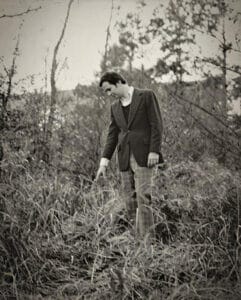
Beside Dettman’s bed, a doctor held up a white, blood-spattered vest with a little padding and some straps, a far cry from the hard-plated tactical gear officers wear today.
“Merle, if he hadn’t had that vest on, it would have taken out his heart, and he would’ve been dead before he hit the ground,” Temple remembers the doctor telling him.
Dettman shouldn’t have made it. On any other day, he may not have.
But earlier that day, as Temple headed out for the sting, he sat in his car, laid a hand on the gear shift and stopped. Or, as he puts it, something stopped him.
He recalls a presence filling the car, accompanied by a voice saying, “Go back for the bulletproof vest.”
Shaken but undeterred, Temple brushed it off.
“I thought to myself, ‘What was that? I’m losing my mind. I’ve been working too hard,’” he said. “I said, ‘This is going to be routine. I’ve got no reason to believe it’s going to be more dangerous than usual.’”
But as he put his hand back on the gear shift, the voice continued “times 100, and it wasn’t optional,” Temple said.
“I threw up my hands and said, ‘OK. OK.’ And went back up to the office, got the two vests, met the agents and set up the parameters of the deal,” he said. “I told them, ‘I want y’all to wear a vest today.’ ‘We don’t want to.’ ‘Just humor me. Don’t ask me why.’”
Nearly 50 years since, Temple remembers well the weight of what he felt in his car that day and what followed – a sting, an ambush and the vest that saved a life it wasn’t built to save. He turned the story into a book, one that caught the attention of a “Criminal Minds” producer and nearly became a movie.
The ambush
Temple, captain over the north half of the state at the time, said dealers had flooded the Golden Triangle with high-grade heroin, then cut its purity once buyers were hooked.
After a few successful small deals, Temple’s team planned a bigger buy in hopes of luring out those backing lower-level dealers in Columbus. But first they needed flash money, $10,000 worth, or nearly $58,000 today.
“I had worked at the Lyric Theatre while I was going to college off and on … and so I knew my former boss at the theater would have cash on hand,” he said. “So I went back home and cashed a check for $10,000, which is a lot of money, but it was really a lot of money in 1976.”
The deal was supposed to happen within Columbus city limits, so Temple and other supervisors could stay close without being noticed. But when Niell and Dettman – the two undercover agents – met their mark, Jimmy Ray, he suggested the deal move into the county.
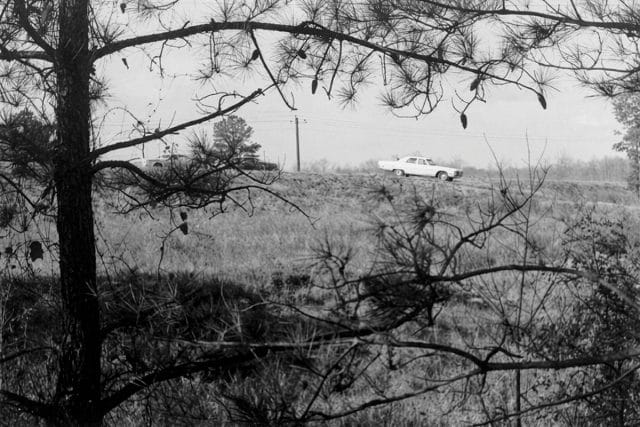
Not wanting to lose the deal, Niell and Dettman rendezvoused with Ray near Greenhill Bridge in the woods on the north side of where South Pickensville Road crosses Luxapalila Creek, according to Dispatch reporting at the time.
Temple parked at the edge of the agents’ body-mic range, the signal cutting in and out.
“I heard them cut on. I heard them talking and negotiating the deal,” Temple said. “… And then it cut off. I was banging on the receiver, and it came back on. I heard ‘Bureau of Narcotics. You’re under arrest.’ And then it cut out again, and (when) it cut back on, I heard (gunshots). The radios erupted with agents all around that said, ‘Merle, they’re taking fire! They’re taking fire!’”
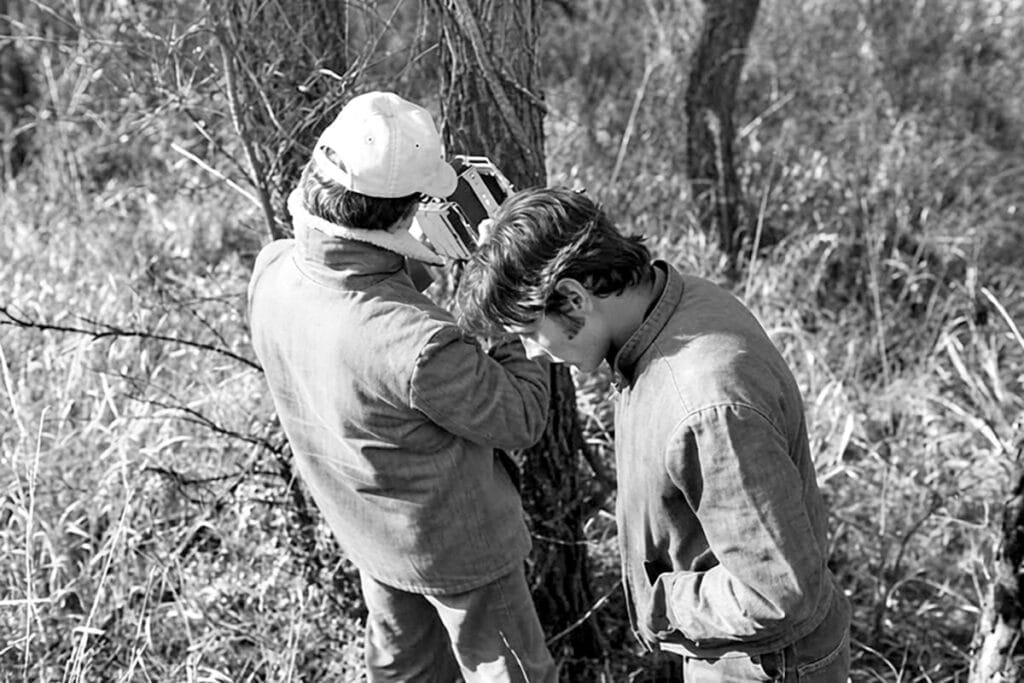
Once the agents moved to arrest Ray, he started to pull a gun, and his brother, Johnny Ray, hidden nearby with a rifle, opened fire, Temple said. Niell got off a shot at Jimmy Ray before he fled.
“(Johnny Ray) was there to protect his brother from being ripped off by other dealers,” Temple said. “… So even though his (Jimmy Ray) was shouting, ‘No, don’t! Don’t!’ his brother couldn’t hear it. I think he was trying to tell him that this is not a ripoff. These are police.”
Johnny Ray had already ditched his rifle and fled the scene by the time Temple got to the agents, though the team didn’t know that yet.
“I stood up and walked down the side of the hill, with my weapon pointing out from the horizon and agents yelling at me to get down, (asking) ‘Have you lost your mind?’” Temple said. “But I could see that $10,000 blowing down the hill. I was responsible for it. He had fled, and I gathered up the money.”
The investigation
With Dettman in surgery and Jimmy Ray in custody, Temple’s team started chasing leads to find their second suspect. At the same time, a winter storm iced roads from Jackson to Corinth. It was so cold, agents had trouble starting their cars, Temple said.
“Knowing who the one violator was, we knew he and his brother were tight and went to his brother’s home,” Temple said. “They had set up an elaborate alibi that they’d been playing cards all night (and) had a lot of people there.”
Temple and local officials began interviewing everyone implicated in the alibi, but they all stuck by the brothers’ story. That was, Temple said, until the “weak link” walked in: an 18-year-old who first told Temple he wouldn’t waver either.
“I said, ‘Well, OK if you want to stick with that story, but you know, if that agent dies tonight, … you might be an old man when you get out of Parchman (and you’re an) accessory to murder,’” Temple told him. “His lips started quivering.”
The teenager broke, and the alibi unraveled. By about 3 a.m. that morning, roughly 12 hours after the ambush, the team found Johnny Ray. He confessed shortly after.
Almost a movie
Telling the story nearly 50 years later, Temple still credits the voice he heard that day with saving Dettman’s life.
“Because God intervened, spoke to me not once but twice, Jerry lived another 50 years and just (recently) passed away because of what I heard in the car,” he said. “Because otherwise, I would have never brought those vests.”
That moment was one that struck Jim Clemente, a retired FBI profiler and “Criminal Minds” writer and producer, when he first read Temple’s book, “A Ghostly Shade of Pale.”
“The realism and the nuanced and eloquent and emotional way that he conveyed his stories … I mean, his storytelling is epic,” Clemente told The Dispatch on Thursday.
Clemente, who also owns a production company staffed largely by former law enforcement and military personnel, brought Temple to Hollywood to meet with producers.
But a movie wasn’t meant to be, Clemente said, due to projects shutting down during the COVID-19 pandemic and the subsequent Writers Guild of America strike.
“I still believe in his story,” Clemente said. “I think that it’s an amazing set of circumstances that few people have ever experienced, and certainly few of the people that have experienced it could tell the stories in a way that he could.”
Temple and Clemente remained friends, even doing a book signing together in Tupelo, where Temple lives now. The friends share a desire to ensure stories like Temple’s aren’t forgotten.
For Clemente, it’s about making sure the people who lived the stories are the ones profiting from them. For Temple, it’s about honoring agents like Niell and Dettman, both of whom have passed away, and reminding people that crimes like this can happen anywhere.
“Things still happen here that people are unaware of, and they don’t see the forces of darkness working around them,” he said. “And plus, if I’m honest, I’d probably say I feel close to all those guys again when I tell the story. I’ve told it many times, but I feel close to them again, and I miss them.”
McRae is a general assignment and education reporter for The Dispatch.
You can help your community
Quality, in-depth journalism is essential to a healthy community. The Dispatch brings you the most complete reporting and insightful commentary in the Golden Triangle, but we need your help to continue our efforts. In the past week, our reporters have posted 33 articles to cdispatch.com. Please consider subscribing to our website for only $2.30 per week to help support local journalism and our community.