
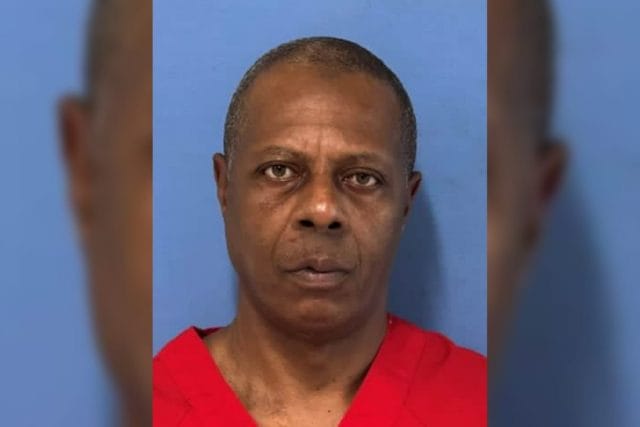
The state is urging the Mississippi Supreme Court to reject Willie Jerome “Fly” Manning’s latest bid to reopen his 1994 capital murder conviction, arguing his claim is barred as untimely and already decided.
In a motion filed last month, Manning’s defense argued two recent U.S. Supreme Court decisions gave him new ground to challenge the jury selection process at his 1994 trial, during which prosecutors struck several Black jurors from the panel.
Attorney General Lynn Fitch’s office filed a response to Manning’s motion Sept. 18, arguing neither case changes existing law and that Manning’s claim comes too late and revisit an issue the court already decided on direct appeal.
Manning has spent more than three decades appealing his conviction and pursuing post-conviction relief, a process which allows someone convicted of a crime to challenge their conviction or sentence after the direct appeals process, after being convicted and sentenced to death for the 1992 capital murders of Mississippi State University students Tiffany Miller and Jon Steckler. He was granted a stay of execution in 2013.
The attorney general’s office in 2023 requested the stay of execution be lifted. In response, Manning’s defense argued new evidence undermining the case had come to light, including recanted testimony from a jailhouse informant and another witness who testified against Manning.
The Mississippi Supreme Court, with a 5-4 vote, rejected those claims in September 2024, denying a new trial on a procedural basis and with the majority opinion that the jailhouse informant’s recantation would not have caused a different result. The four dissenting justices, however, argued Manning should have been allowed an evidentiary hearing to determine what impact the recantation may have had.
Shortly after that ruling, in October 2024, Manning’s attorneys asked the Supreme Court to reconsider that decision, but the court has not yet taken up the request.
State’s response
Manning’s September PCR motion hinges on two U.S. Supreme Court rulings – Flowers v. Mississippi, decided in 2019, and Pitchford v. Cain, decided earlier this year – that both dealt with claims of prosecutors improperly striking Black jurors from a trial.
Manning argues those rulings give him a legal opening to revisit his decades-old claim that prosecutors improperly selected the jury in his trial even though the Mississippi Supreme Court already rejected that argument on direct appeal.
The state disagrees on the basis that neither case actually changes the law, citing Powers v. State, in which the state Supreme Court found decisions that allow defendants to pursue new claims for PCR must be “one that announces a new rule of law,” the response reads.
The state also notes the state Supreme Court already reviewed the jury selection process in Manning’s trial following when he filed his direct appeal in 1998. Because that review already happened, the state argues Manning has no grounds for another request.
Additionally, the state argues neither case presents an intervening decision exception, which allows Mississippi courts to consider late or repeated PCR claims when a new ruling is applicable. Defendants generally have three years to file a PCR motion after conviction unless an exception applies.
“Manning thus fails twice over: he identifies no statutory exception that would authorize this Court to reexamine its twenty-eight-year-old Batson decision, and he fails to show that Pitchford requires a different result,” the state’s response reads.
McRae is a general assignment and education reporter for The Dispatch.
You can help your community
Quality, in-depth journalism is essential to a healthy community. The Dispatch brings you the most complete reporting and insightful commentary in the Golden Triangle, but we need your help to continue our efforts. In the past week, our reporters have posted 37 articles to cdispatch.com. Please consider subscribing to our website for only $2.30 per week to help support local journalism and our community.