Post

Log inSign up

Post

Daniel Lemire on X: "Xiaomi is the Chinese tech giant. Their phones compete with iPhones. Their new CPU roughly matches Apple cores on single threaded tasks, and is much faster in multithreaded execution. Of course, Apple may soon announce their next processor, so this edge may not last long. And"

user avatar
Daniel Lemire
@lemire
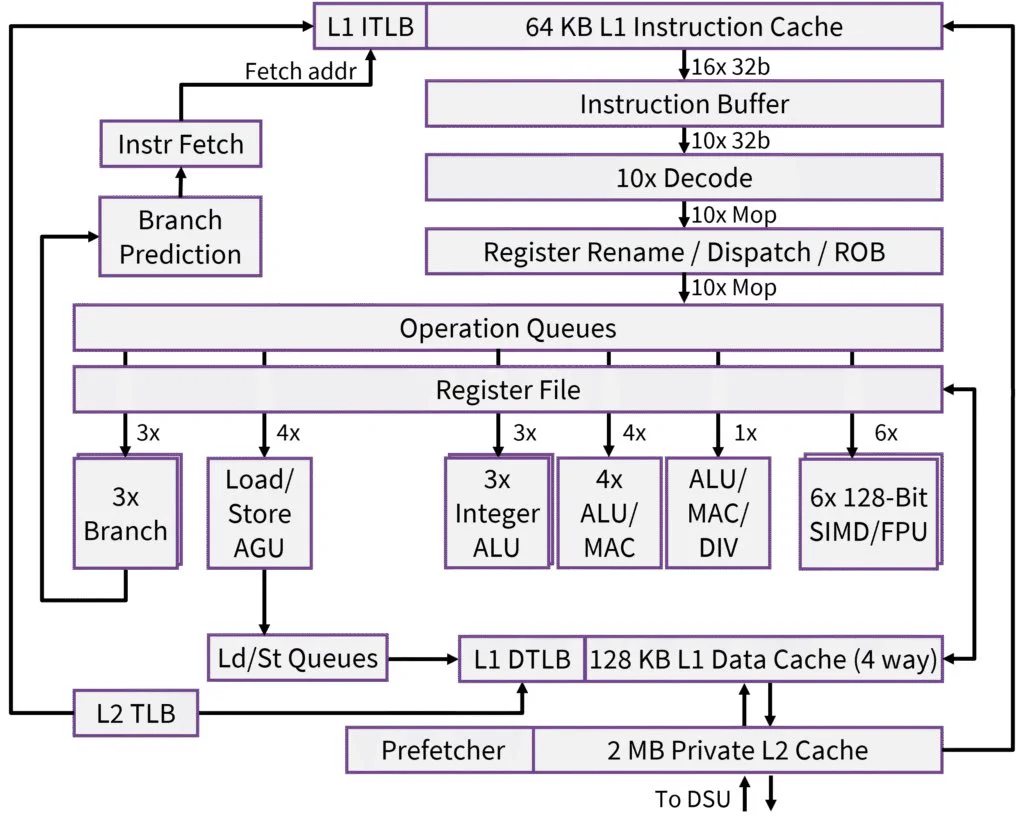
Xiaomi is the Chinese tech giant. Their phones compete with iPhones. Their new CPU roughly matches Apple cores on single threaded tasks, and is much faster in multithreaded execution. Of course, Apple may soon announce their next processor, so this edge may not last long. And you may find it it difficult to find a phone with the next CPU (Xring O3). But the new Xiaomi processor is worth discussing further as it reveals an important trend. The chip has a lot of cache (44 MB in total). It is more than most laptop CPUs. If you have an Intel processor in your laptop, chances are good that you have less cache. The biggest cores on the the Xring O3 are the C1-Ultra. C1-Ultra really powerful cores. They support SME2 (Scalable Matrix Extension 2) for matrix/AI acceleration, SVE2 for data parallelism (SIMD). It is astonishingly wide, with 21 execution ports, six of which support SIMD operations (128 bits). This is more execution ports than you have on your Intel/AMD processor. The AMD Zen 5 has the upper hand because it can do 4x512-bit but 6x128-bit is the best you can do on an ARM chip as far as I know. So the trend is clear. We are getting cores that are massively parallel in terms of the number of execution units. We get better SIMD (more units) and many more units capable of doing arithmetic. This means that you can do many, many independent additions or multiplications per cycle. And much more cache. This is where all the transistors go.
user avatar
Ice Universe
@UniverseIce
Aug 24
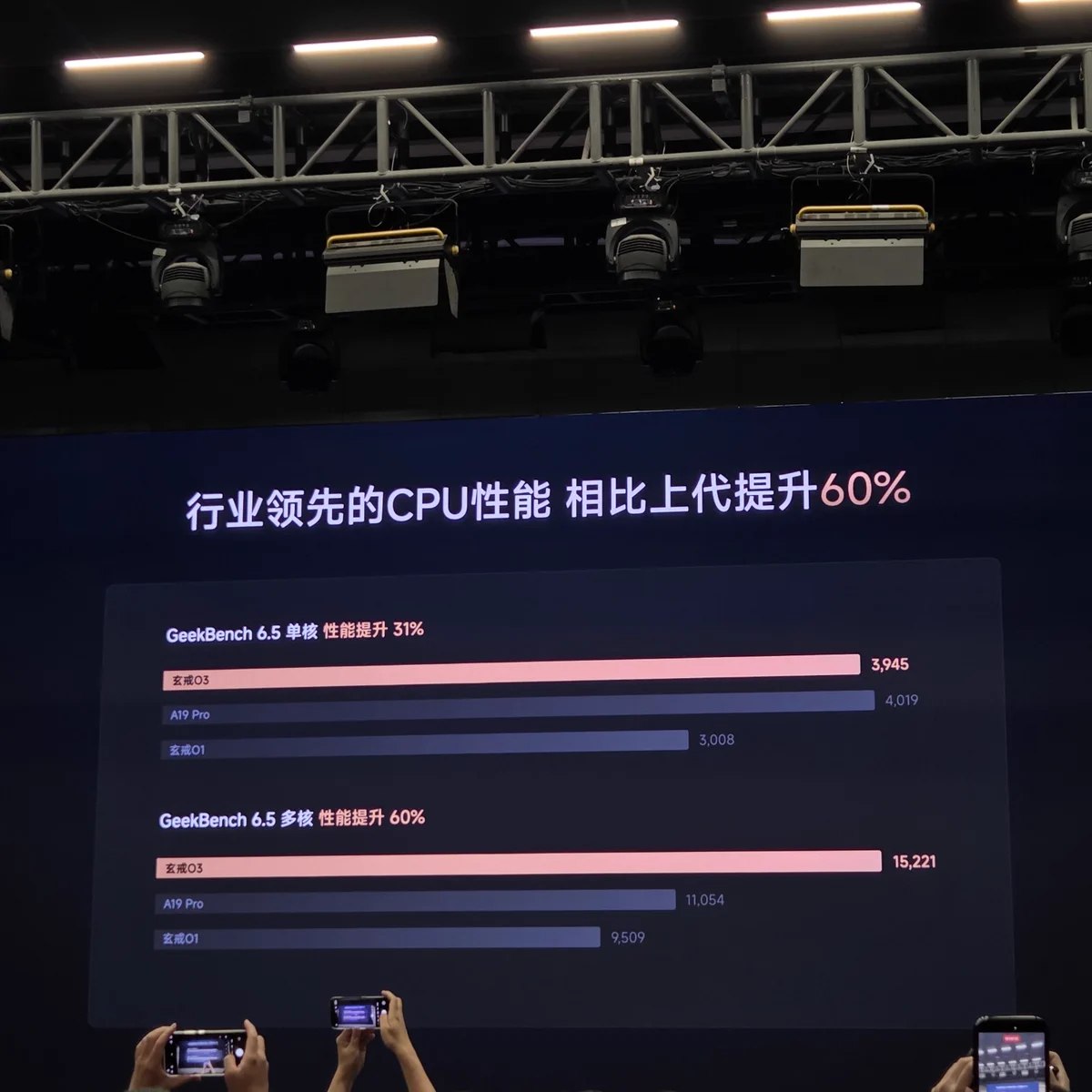
Xiaomi’s Xring O3 delivers a massive performance leap, scoring 3,945 in Geekbench single-core and an unprecedented 15,221 in multi-core.
2:24 PM · Aug 24, 202685.9KViews

Log in or sign up for X

See what’s happening and join the conversation

Continue with phone
or
Log in with username or email

Relevant people

Avatar
Daniel Lemire@lemireFollow

Trending now

Terms·Privacy·Cookies·Accessibility·US TIDA·Ads Info·© 2026 X Corp.
  • user avatar
    Daniel Lemire
    @lemire
    Xiaomi is the Chinese tech giant. Their phones compete with iPhones. Their new CPU roughly matches Apple cores on single threaded tasks, and is much faster in multithreaded execution. Of course, Apple may soon announce their next processor, so this edge may not last long. And you may find it it difficult to find a phone with the next CPU (Xring O3). But the new Xiaomi processor is worth discussing further as it reveals an important trend. The chip has a lot of cache (44 MB in total). It is more than most laptop CPUs. If you have an Intel processor in your laptop, chances are good that you have less cache. The biggest cores on the the Xring O3 are the C1-Ultra. C1-Ultra really powerful cores. They support SME2 (Scalable Matrix Extension 2) for matrix/AI acceleration, SVE2 for data parallelism (SIMD). It is astonishingly wide, with 21 execution ports, six of which support SIMD operations (128 bits). This is more execution ports than you have on your Intel/AMD processor. The AMD Zen 5 has the upper hand because it can do 4x512-bit but 6x128-bit is the best you can do on an ARM chip as far as I know. So the trend is clear. We are getting cores that are massively parallel in terms of the number of execution units. We get better SIMD (more units) and many more units capable of doing arithmetic. This means that you can do many, many independent additions or multiplications per cycle. And much more cache. This is where all the transistors go.
    user avatar
    Ice Universe
    @UniverseIce
    Aug 24
    Xiaomi’s Xring O3 delivers a massive performance leap, scoring 3,945 in Geekbench single-core and an unprecedented 15,221 in multi-core.
    2:24 PM · Aug 24, 202685.9KViews
  • user avatar
    Jon Clegg
    @jonclegg77
    Aug 24
    This smells somewhat legitimate and somewhat BS. The architecture itself looks impressive — TSMC 3nm, a 4+ GHz prime core, tons of cache, and a very wide execution engine. And the claimed Geekbench numbers, around 3,945 single-core and 15,221 multi-cor, are especially impressive,
  • user avatar
    noname
    @l1bertypr1me
    Aug 24
    Tensor G6 also has C1-Ultra core, but can only get ~2700 single core. Something feels off here.
  • user avatar
    Chris Allen
    @theodorvaryag
    Aug 24
    SVE2 with 21 execution ports? good golly miss molly I could make that thing scream.