
The day of remembrance will begin at 6:29 a.m., the time the massacre began, with a series of ceremonies, installations and events across the country. Events will be held, among other places, at the site of the Nova music festival in the Re’im forest and at Sha'ar HaNegev arches junction, where the flag will be lowered to half-staff. Demonstrations are expected at additional locations, while October Council member families will take part in displays and other protest activities in Caesarea and Jerusalem.
At 7 a.m., several organizations will hold memorial ceremonies outside the homes of ministers who were serving in the government on the day of the massacre. Ten minutes later, a vehicle convoy will leave Caesarea for Tel Aviv along what organizers are calling the “Route of Abandonment.” At 8:30 a.m., the women’s protest movement will hold an event at Tel Aviv’s Trumpeldor Beach under the banner “From Abandonment to Responsibility,” centered on an installation intended to symbolize the events of October 7.
At noon, the October Council plans to hold a nationwide minute of silence at hundreds of locations. At the same time, the exhibition “The Space Left Behind” will open to the public at the Peres Center for Peace and Innovation in Jaffa, displaying personal belongings of dozens of people murdered on October 7. A brief ceremony will also be held there with representatives of October Council families.

Throughout the afternoon and evening, a series of demonstrations will be held across the country. Demonstrations involving protest groups and October Council members are planned in Haifa, Afula, Tzemach Junction, Rosh Pina Junction and Sde Boker, among other locations. At 6:29 p.m., a ceremony will be held at the Nova site in the Re’im forest with bereaved families and members of the Nova Tribe association. At 7:30 p.m., a stage for testimony will open at the Arches Junction in Sha’ar HaNegev.
The day’s events will culminate at 9:15 p.m., when the Kumu movement and October
7 families hold their national memorial ceremony at Yarkon Park in Tel Aviv. The ceremony will also be screened at locations across the country. It will be hosted by former hostage Eli Sharabi and actress Shani Cohen.
Kibbutz Nir Yitzhak began events marking the October 7 anniversary on Tuesday with community memorial gatherings, which will continue Wednesday in memory of kibbutz members who lost their lives. Artists from the Israeli Opera accompanied the families Tuesday, with performances in memory of those who fell and those who were murdered. Another gathering will be held at the cemetery at 9:30 a.m. Wednesday in memory of deceased kibbutz members.
The Eshkol Regional Council also gathered Tuesday evening to commemorate the 259 residents murdered in the massacre. Council head Michal Uziyahu said: “We will continue this journey together, demanding accountability and the establishment of a commission of inquiry, and ensuring that we create a different reality with meaningful security, not merely a sense of security.”
Southern Command chief Maj. Gen. Yaniv Asor said at the Eshkol ceremony: “The work is not finished, the journey of recovery is not complete. We are determined not to rest until we break their strength and their spirit. I would like to use this sacred platform to issue an unequivocal warning to Hamas: Any attempt to attack IDF soldiers or residents of the Negev will be met with a sharp and powerful response from us.”
In Hadera, a walking trail was inaugurated in the Beit Eliezer neighborhood in memory of Master Sgt. Boris “Buka” Danilov, in a ceremony attended by Mayor Nir Ben Haim and Israel Police Commissioner Daniel Levy.

A walking trail in memory of Master Sgt. Boris 'Buka' Danilov inaugurated in Hadera
(Photo: Shlomi Gabay, Hadera Municipality)
The government, it should be recalled, faced fierce criticism over the fact that the state memorial day was effectively set by the same elected officials who were in office when the October 7 massacre occurred, none of whom resigned or acknowledged any responsibility for the failures. Bereaved families, hostage families and survivors of the massacre accused the coalition of trying to shape the memory of October 7 while obscuring its own failures, including by designating the war the “War of Revival,” rather than the commonly used “Swords of Iron War” or “October 7 War.”

A Palestinian image shows the breached border fence in the southern Gaza Strip on Oct. 7
Orly Cohen, whose son Amit was murdered in a roadside shelter near Re’im, said in a statement on behalf of the families: “We will not allow the establishment of a ‘state’ commission of inquiry whose members are appointed by a Supreme Court justice who stands at the heart of the social dispute and has lost the trust of broad sections of the public. The role of the court, which for years gave our enemies a tailwind, must be investigated. We represent hundreds of families affected by Octber 7 who do not trust a state commission of inquiry led by Supreme Court justices who will serve as the bulletproof vest for those who abandoned our security.”
This is a timeline of the major events that have shaped Israel since that morning plunged the country into the longest war in its history.
October 8-15, 2023 — Evacuation of residents: Large-scale evacuations begin from Gaza border communities and communities along the northern confrontation line. About 60,000 northern residents are evacuated from their homes.
October 12, 2023 — National emergency government formed: The National Unity party, headed by Benny Gantz, joins the government and a smaller war cabinet is established to oversee the campaign alongside Prime Minister Benjamin Netanyahu and Defense Minister Yoav Gallant.
October 27, 2023 — Ground offensive in Gaza begins: IDF forces enter the northern Gaza Strip on the ground with the goal of dismantling Hamas infrastructure and bringing back the hostages.

Ori Magidish (center) pictured with her fanily after being rescued from Hamas captivity
(Photo: Shin Bet)
November 24-30, 2023 — First hostage deal: A weeklong pause in the fighting results in the release of 105 hostages, Israelis and foreign nationals, in exchange for the release of Palestinian security prisoners and the entry of humanitarian aid. Fighting resumes December 1.
April 13-14, 2024 — First Iranian attack: Iran directly launches hundreds of drones and missiles at Israeli territory for the first time. The vast majority are intercepted by the IDF and an international coalition.
May 6, 2024 — Rafah operation begins: The IDF begins operating in eastern Rafah after issuing evacuation orders to the population in the area. On May 7, forces take control of the Palestinian side of the Rafah crossing and later that month establish operational control over the Philadelphi Corridor.
June 9, 2024 — National Unity leaves the government: Benny Gantz and his party announce their withdrawal from the emergency government, and the smaller war cabinet is formally dissolved.
July 30-31, 2024 — Senior figures killed in Beirut and Tehran: Hezbollah military commander Fuad Shukr is killed in Beirut and Hamas leader Ismail Haniyeh is killed in the heart of Tehran.
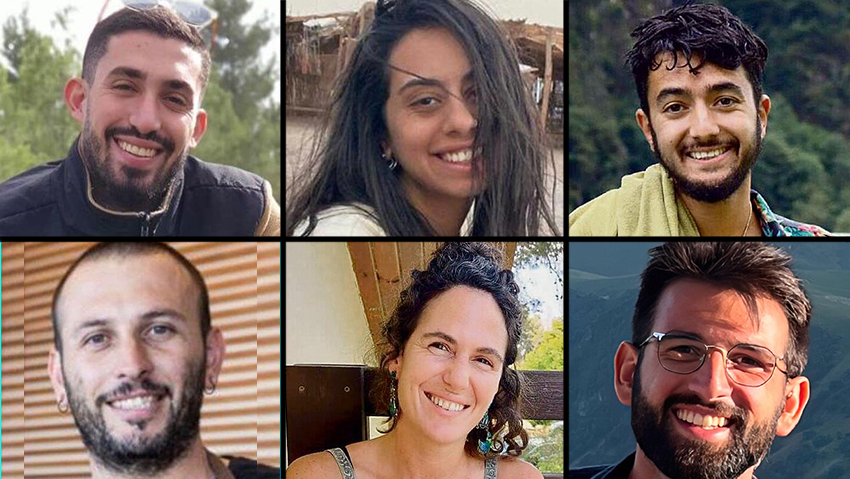
The Beautiful Six (from top left clockwise): Ori Danino, Eden Yerushalmi, Hersh Goldberg-Polin, Almog Sarusi, Carmel Gat, Alex Lobanov
(Photo: Courtesy of the families, AP)
October 1, 2024 — Second Iranian attack and Lebanon ground offensive: The IDF begins a limited ground operation in southern Lebanon. At the same time, Iran launches about 180 ballistic missiles at Israel.
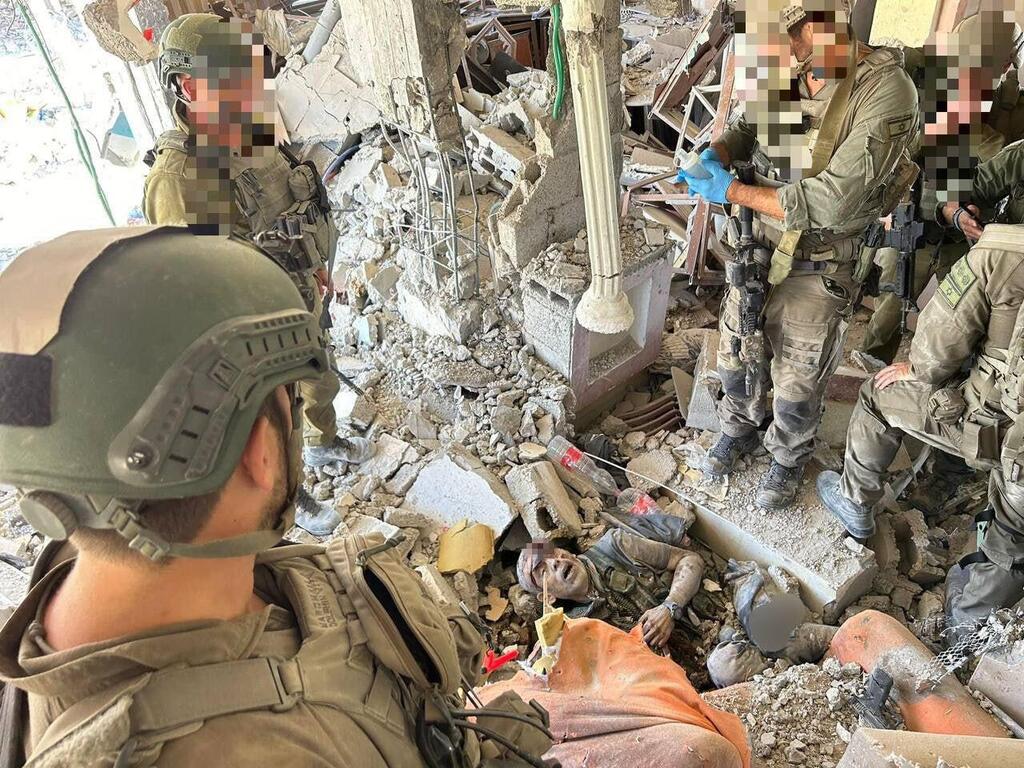
IDF soldiers stand over Yahya Sinwar’s body in Rafah, Gaza Strip
October 26, 2024 — Operation Days of Repentance: Israel carries out an overt, direct retaliatory attack in Iran, striking military targets, air defense systems and missile production facilities.
November 5, 2024 — Defense Minister Yoav Gallant fired: Prime Minister Benjamin Netanyahu announces Gallant’s dismissal as defense minister over disagreements about the conduct of the war and appoints Israel Katz in his place.
November 27, 2024 — Lebanon ceasefire agreement: A ceasefire on the northern front with Lebanon takes effect.

Avera Mengistu reunites with his family at Sourasky Medical Center after his release from captivity
(Photo: Maayan Toaf, GPO)
March 18, 2025 — Operation Might and Sword: Following the collapse of the ceasefire under the second hostage deal, the IDF launches a large-scale surprise operation across the Gaza Strip. A series of senior figures in Hamas’ civilian and military leadership are killed in the opening airstrikes.
May 18, 2025 — Operation Gideon’s Chariots: The IDF expands its ground offensive in the central and southern Gaza Strip, including Deir al-Balah, Nuseirat and Rafah, to seize strategically important territory, destroy underground infrastructure and dismantle remaining Hamas battalions in central Gaza.
July 16, 2025 — Syrian General Staff headquarters struck in Damascus: Following massacres of the Druze population in southern Syria by sectarian and government forces, the Israeli Air Force strikes the Syrian military’s General Staff building in Damascus.
September 9, 2025 — Assassination attempt in Qatar: Israeli Air Force jets strike a secure compound in Doha where Hamas’ overseas leadership is meeting. Senior Hamas officials Khalil al-Hayya and Zaher Jabarin survive, but several of their associates and al-Hayya’s son are killed.
March 11, 2026 — Hezbollah launches more than 200 missiles at Israel.
April 7, 2026 — Temporary ceasefire in campaign against Iran: After weeks of fighting between Iran and the United States and Israel, a two-week temporary ceasefire agreement is reached with Pakistani mediation.
April 17, 2026 — Israel-Lebanon ceasefire during Operation Roaring Lion: A ceasefire between Israel and Hezbollah is declared, although the fighting does not end entirely.
June 19, 2026 — Israel-Hezbollah ceasefire: Israel and Hezbollah agree to another ceasefire under U.S. mediation. The IDF remains in parts of southern Lebanon.
July 17, 2026 — Knesset dissolved: The 25th Knesset ends its term and enters an election recess ahead of elections for the 26th Knesset.