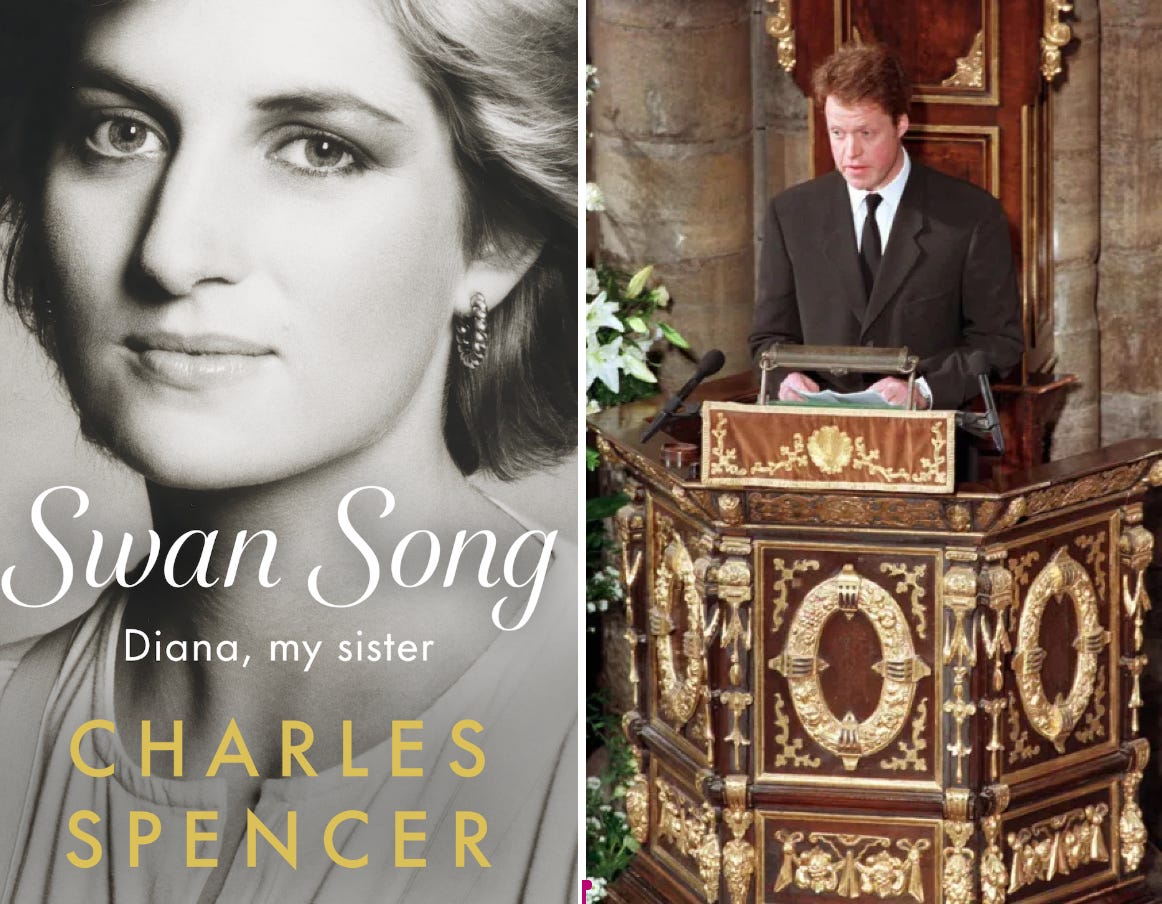
Just as King Charles and Prince William are trying to adjust to the awful new reality of constant rogue publicity from the now England-residing Sussexes, the Charles Spencer bomb went off. Princess Diana’s brother, having kept mum for 29 years since his thunderbolt eulogy for his sister in Westminster Abbey, suddenly unleashed the memoir, Swan Song: Diana, my sister, that no one saw coming. In the first incendiary excerpt in The Daily Mail, Spencer renewed his credentials as a flamethrower. He recounted that, in a row on the phone days after Diana’s death, then-Prince Charles “hissed, ‘Rest assured we’ll forget her soon enough.’” Holy moly.
The trouble for King Charles is that Spencer is an acclaimed historian, who has the most intimate of qualifications to write about the most adored woman in the world. Diana’s funeral will always be defined by the thrilling impertinence of his eulogy from the Westminster pulpit, in which he pledged to protect the young William and Harry, saying, “we, your blood family, will do all we can to continue the imaginative and loving way in which you were steering these two exceptional young men so that their souls are not simply immersed by duty and tradition, but can sing openly as you planned.” The 33-year-old Earl Spencer’s tribute, hurled at the frozen faces of the entire royal family seated in the front pews, was the nearest thing one could get in the late 20th century to an act of sedition. One congregant I spoke to remembered “the stunned silence in the abbey, a silence so deep, it was like being wrapped in black velvet, an almost physical feeling.” Then followed the burst of applause from the crowd outside. “It washed through the Great West door,” I wrote in my 2007 book The Diana Chronicles,”and down the nave until, for the first time in the great church’s history, everyone - except the royal family - was clapping.”
Nearly three decades later, Spencer’s new literary hand grenade landed on the king just as he was hosting his most significant convening in months at Dumfries House in Scotland with such tech overlords as Nvidia CEO Jensen Huang and Google DeepMind co-founder Demis Hassabis. As has happened so often in the last decades, family scandal was the saboteur of seriousness. The headlines that should have been dominated by the statesman king’s leadership on the apocalyptic topic of whether snickering algorithms are on their way to overriding humanity were instead reprising the tattered topic the king dreads most: Diana, and how he treated her. Never explain, never complain, be damned! The king’s fury could be seen in a rushed-out statement attributing Spencer’s depiction to the misremembrance of “fraternal grief.”
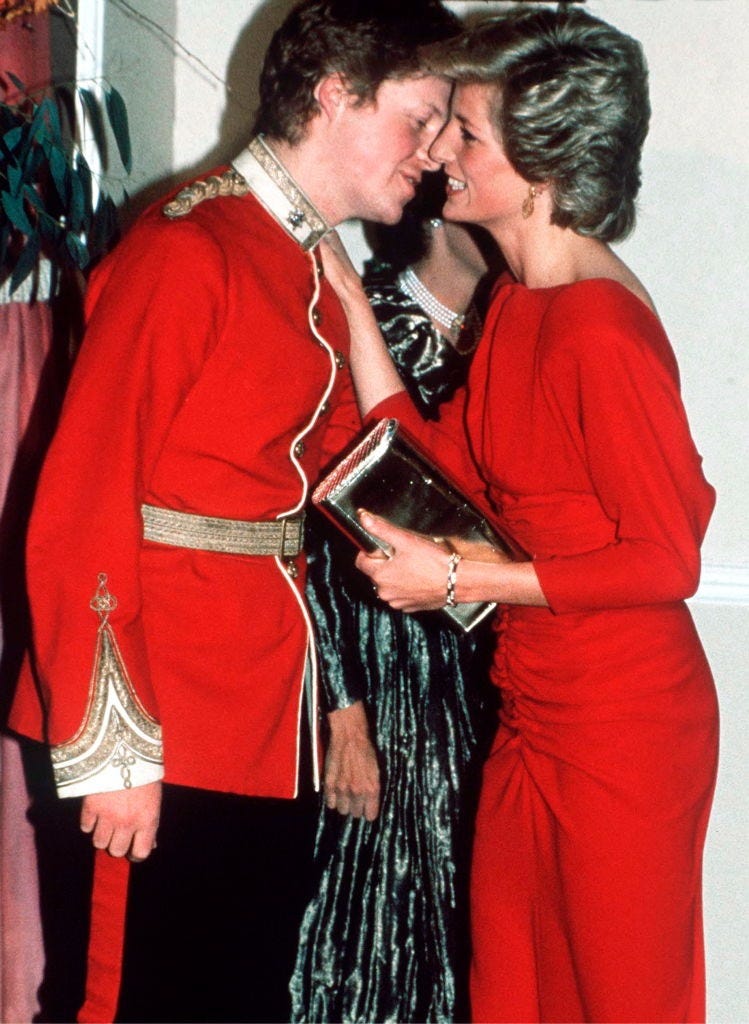
Anti-Spencer outrage exploded in the comments section of the Mail. The famously sensitive king would surely never have been so hideously callous! But the vivid candor of Spencer’s book is, to me, persuasive. In a work of biography, the writer includes accounts by others who can bring context to a remark that seems unconscionable without it. Swan Song is, as Spencer keeps insisting, a memoir. He is only obliged to record what he personally heard or saw. He tells how, in his first phone call with Charles after his sister’s death, her former husband sounded “almost giddily elated, like a lottery winner,” conjecturing that Charles, perhaps, was focused on now being free to marry his long-time mistress. Here I disagree. In my own reporting for The Diana Chronicles, friends and staffers remembered how Charles, in the days after Diana’s death, was almost out of his mind with guilt, grief, paternal anguish, and self-pity. In his panic, one can imagine him blurting things he now regrets or has forgotten. I was told that the future king believed the tragedy was, in fact, a disaster for his long campaign to win public acceptance for Camilla. “They’re all going to blame me,” he apparently said to his private secretary, Stephen Lamport. “The world’s going to go completely mad.” He was right. The finger-pointing did turn on him. And Camilla became radioactive for a time. She had to essentially go underground at her Wiltshire home, while the press bayed for someone other than itself to blame.
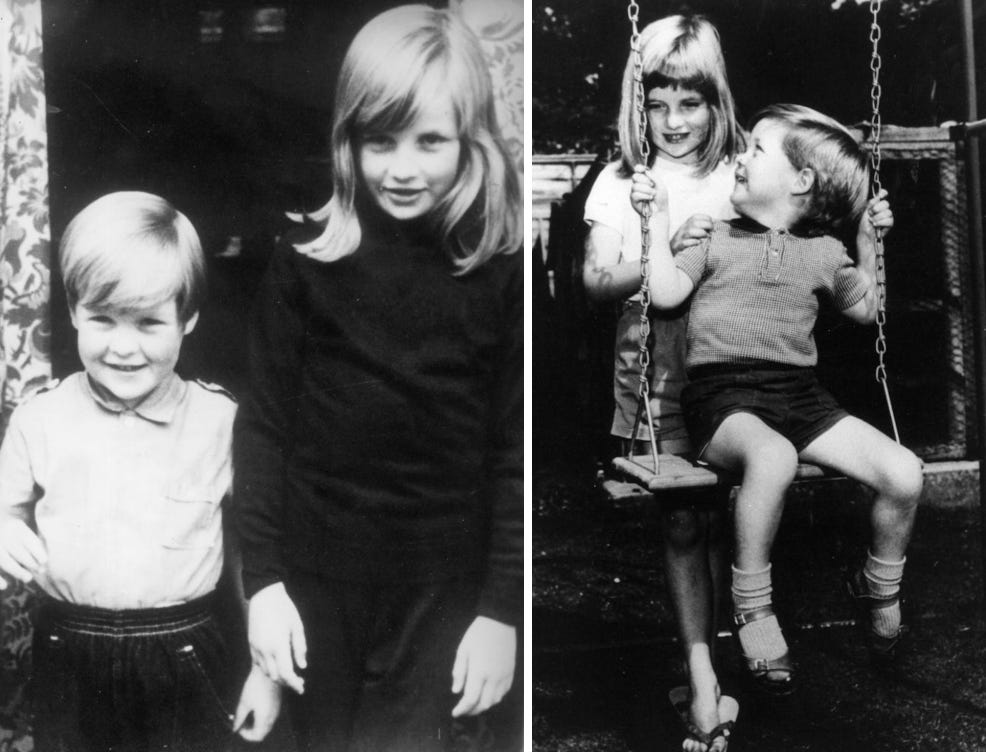
For his book, Spencer uses his notorious eulogy as an effective framing device, plucking out his memories of Diana to riff on what he insistently calls their happy childhood at Park House in Sandringham, before their father inherited the palatial pile Althorp, on 13,000 acres of Northamptonshire. In the fractured marriage of his parents, Johnnie and Frances, he is clearly Team Johnnie, painting him as a benign, well-meaning father, who did his best after his wife absconded with her lover Peter Shand Kydd, losing custody of her four children. But like a rejected shadow, counterfactuals intrude on the narrative. Johnnie Spencer comes through as a disappointed depressive, staring dolorously out the window of his study as he waited too long for his inheritance. If he was so benign, why did he allow his children to learn by reading it in the newspaper that he had remarried, and to a woman they considered an avaricious fortune hunter, Raine, Countess of Dartmouth? (Spencer is a gifted portraitist. There is no further depiction of Raine needed once you know she shouted “Where’s my fucking egg?” from the top of the stairs and wore a ballgown for dinner.) At Diana’s wedding, wobblingly infirm after a stroke, Johnnie stumbles in the pew after walking Diana down the aisle and snaps at Frances for “tripping him up.” “Only later,” writes Spencer, “did I realize that that was the first time I had registered seeing either parent ever talk to the other.”
Who is the Diana we see emerge from this complex skein of fucked-up aristocratic genes? Her brother emphasizes her exuberance, her joyfulness, her extreme sensitivity that he attributes to both ADHD and RSD, a new one to me that stands for rejection sensitive dysphoria. Diana certainly shed bitter tears over criticism in the press, but was also addicted to it. Her learning disability left her with an acute sense of inferiority, at odds with the glowing star power of her emergent charisma. As with Johnnie Spencer, however, there are anecdotes that sound a dissonant note. Charles Spencer observes that Diana had become prone to “explosive outbursts” early in her marriage but that members of his family were “adamant that she had never exhibited any such behavior before the wedding.” But Spencer himself, in the book, reveals things which undermine that view. What about the brother-sister bicycle ride in Diana’s early teens when she suddenly stopped and pushed him over the edge of a steep incline, after he told her of his fear of it? What about the hard slap she administered to her father’s face as punishment for marrying Raine? What about the moment at her brother’s wedding when she pushed Raine down the stairs at Althorp as payback for excluding Frances? There’s an unsettling “snapshot of an instinctive moment” of Diana’s courage when, on a lobster-potting expedition on Scotland’s west coast with Frances, “a lithe, black muscular conger eel...as thick as my arm” writhed free from the pot. As Frances and Charles Spencer recoiled from its gnashing teeth, Diana “reached into the plastic bucket …grabbed the open-bladed pen knife that lay within and brought its point hard behind the eel’s eyes.” Spencer mentions he briefly considered including the anecdote in his funeral oration. Thank god he didn’t.

There have been many howls of condemnation against Spencer for publishing this memoir now. But when exactly would be a good moment to publish it? After the next Epstein file dump on Andrew Mountbatten-Windsor? The book is, actually, not gratuitously hard on the king. Camilla gets a free pass. Spencer does not detail the sordid woes of the Wales’s marital war or offer invasive scenes where he was not personally present. He’s good at evoking that dread Windsor chill we know so well and the casual cruelty of her husband’s family dynamics. Diana tells her brother the bizarre anecdote she got from her husband of when Queen Elizabeth was considering having Charles’s Dumbo ears pinned back to fend off school bullies and Philip thought the idea so ridiculous, he had one of her corgis undergo the operation instead. This story and others like them, Spencer writes, “evidently made her [Diana] feel desperately sad for, and protective of, Prince Charles.” Cut to his account of a late 90s lunch at London’s San Lorenzo restaurant when Diana revealed to her brother she was heading for divorce. “You see, Carlos (her nickname for him), Charles is in love with his valet.” The intervention of libel lawyers seems to have prevented us from learning more.
Why should the now 62-year-old Earl Spencer hoard anecdotes as good as this in the name of pussy-footing probity? Without Swan Song , we would not have known about the rehearsal for his sister’s funeral, to which he arrives with his eulogy crumpled in his pocket and notices “figures emerging from the abbey’s shadows” as he heads for the pulpit to practice. “Oh my God,” he writes as he realizes the shadows are probably palace spies, “I thought, they’re here to check what I am going to say.” Rather than risk being vetoed, he claims that he forgot to bring the speech and does his mic check from the Book of Common Prayer. We would have missed too the exquisite memory of his reading that eulogy alone to Diana’s coffin in Westminster’s Chapel Royal before its final journey, and feeling that the sudden gust of wind lifting the leaves outside was his sister applauding. And we would have been deprived of his heartbreaking shoulder-to-shoulder view of 12-year-old Prince Harry, “tiny and slight and bereft” as they entered the “tunnel of grief,” walking behind the horse-drawn gun carriage bearing the body of the young princes’ mother.
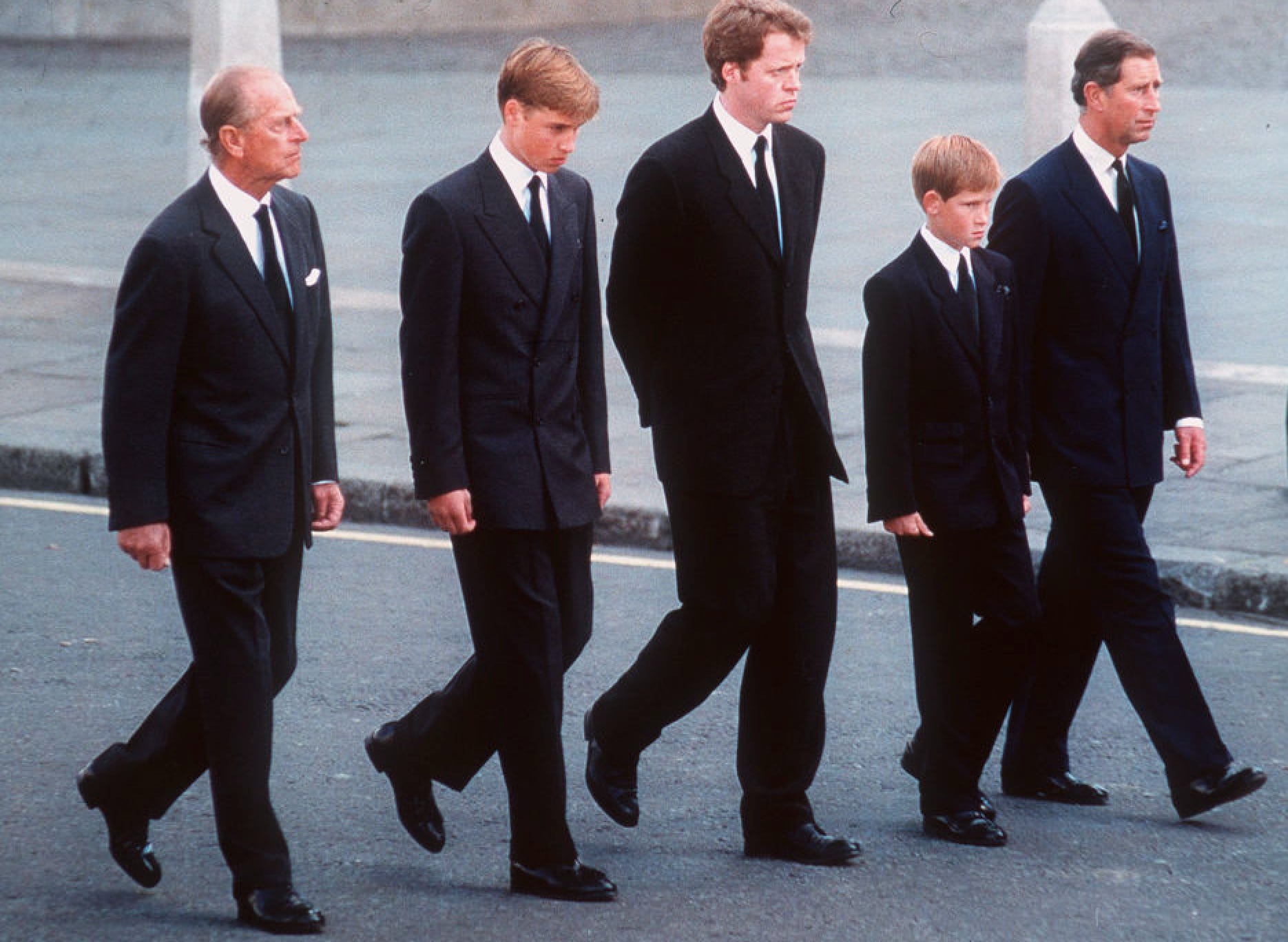
Charles Spencer was there for all this history, indelibly present in one of the most iconic tableaux of the late 20th century, watched round the world by more than two billion people. “We were buffeted by the rawest of emotions on a terrible scale, for the longest time, and we could not process it. We could just feel it.” After holding back for so long, his memoir finally tells us what it was like. The “extraordinary and irreplaceable” Diana is once again applauding.
I will be speaking with Charles Spencer about his memoir at St. Peter’s Chelsea in NYC on Tuesday, September 29 at 7pm at an event sponsored by McNally Jackson Books. Ticket info here.